colouringpages-psart.com

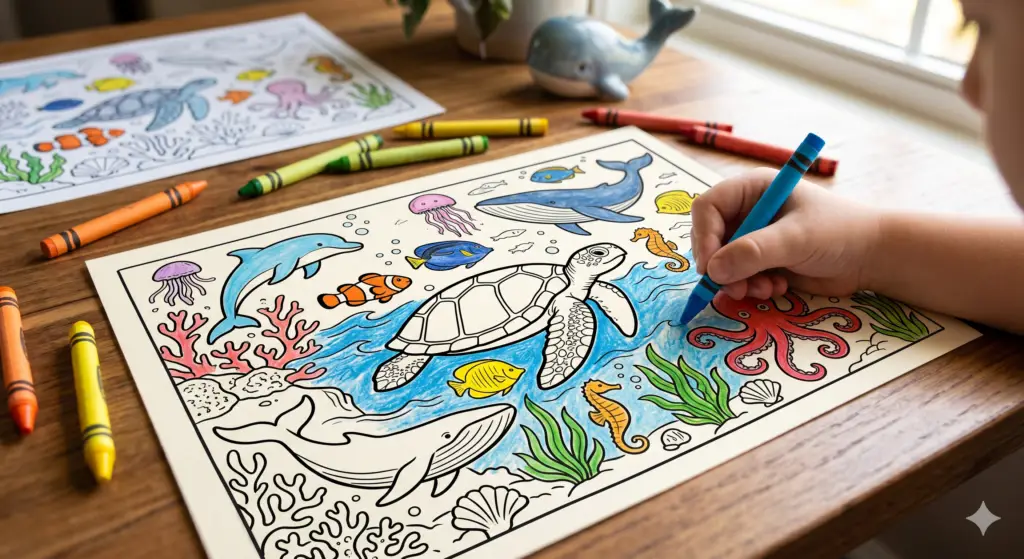
Explore the ocean world with ‘sea animal coloring pages’ that are both educational and entertaining. These pages are filled with whales, dolphins, octopuses, and more, giving kids a chance to learn while they create. Along with coloring pages, we also mentioned fun and interesting facts here. ‘Fun and interesting facts’ help children learn about marine life in a playful way. ‘Fun and interesting facts’ also make these pages ideal for classrooms and homeschooling. Coloring improves motor skills and focus.

     In addition, the variety of sea creatures ensures that each page offers something new. As a result, kids stay excited to learn and color more.Sea animal coloring pages can be downloaded and printed easily. They are loved by parents and teachers alike. Designed by educators, they make learning fun and colorful.

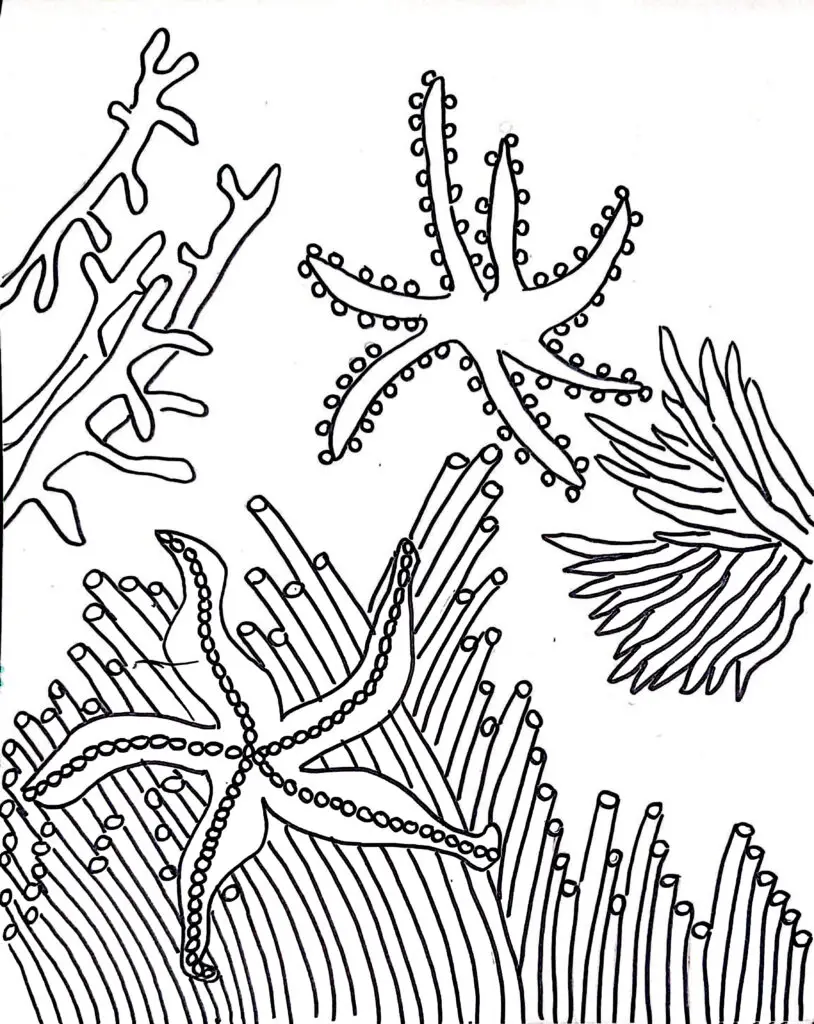
 Facts about sea animals (Star fish)

1. Do starfish have a brain and blood or not?

Star fish are also called sea stars. Their body consists of organs like the stomach, a water vascular system, and digestive glands.

  i) The stomach –consists of two parts a) Cardiac Stomach – It is a pouch-like, glandular stomach that can be everted (pushed out) from the body to engulf and begin digesting food externally.

     b)Pyloric Stomach- It is a smaller stomach that stays inside the body, connected to the cardiac stomach and also connected to the pyloric caeca in each arm.

   ii) Pyloric Caeca -It is a digestive gland located in each arm that secrets enzymes and absorbs nutrients.

The water vascular system consists of

a) Madreporite: It is a sieve-like structure on the upper surface that regulates water intake into the system.

b) Stone Canal: It is a tube connecting the madreporite to the ring canal.  

c) Ring Canal: It is a circular canal surrounding the mouth, connecting to the stone canal, and the radial canals in each arm.

d) Radial Canals: Radial canals are canals extending into each arm from the ring canal.

e) Ampullae: It is a bulb-like structure connected to the tube feet that control their movement.

f) Tube Feet: Tube feet are small, flexible, and muscular extensions used for locomotion, feeding, and sometimes gas exchange.

The brain is absent in star fish. Blood is also absent in it. They pump seawater through their bodies. Starfish use it to move nutrients. Starfish live up to 35 years.

References 

https://biologywise.com/starfish-anatomy

https://allen.in/neet/biology/diagram-of-starfish

Sea Stars (Starfish): Anatomically Speaking


                          To download PDF click here –  Facts about sea animals (Starfish)
 

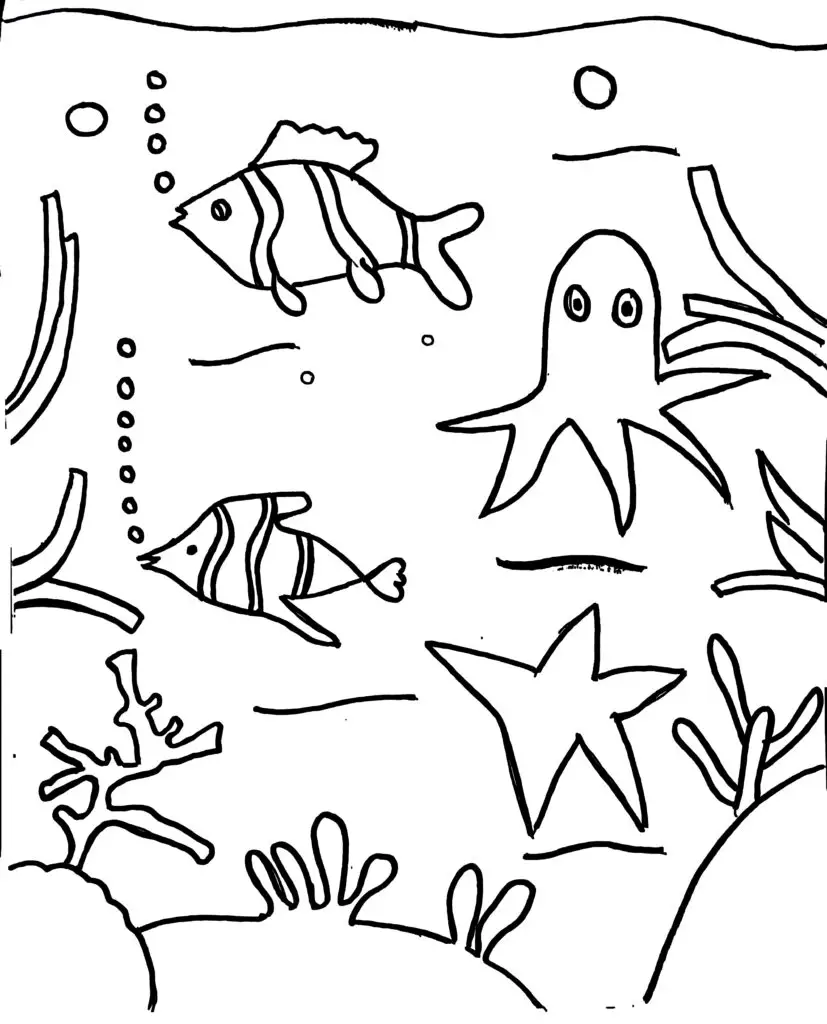
sea animal coloring pages - starfish ,octopus and clown fish in water

Sea animal Coloring pages – Marine Animal  Clown fish ,Starfish andoctopus in water

This page shows a lively underwater scene with friendly sea creatures. A clownfish swims near a rock, an octopus spreads its arms wide, and a starfish rests peacefully on the ocean floor. Bubbles rise around them, adding movement and fun to the picture.

Kids can enjoy bringing this children colouring page to life by using bright colors—the clownfish can be orange and white, the starfish red or yellow, and the octopus purple or blue. The water can be shaded in light blue to complete the ocean scene.This fun and easy-to-color childrens colouring page is perfect for young ocean lovers. It not only brings joy but also helps kids learn about sea animals in a creative way. With plenty of space for colorful imagination, it’s an enjoyable activity that inspires learning through art.

Facts about sea animals (Clown fish)

1. Where do clown fish live?

Clown fish live in warm ocean waters. They move to deeper water during cold seasons. Their native places are the Great Barrier Reef, Southeast Asia, and the Red Sea. Clown fish reside near coral reefs that provide them with shelter and food.

2. What did clownfish eat?

The clownfish eat both plants and animals.  It means clownfish belong to the omnivorous category. They consume dead anemone parts, leftover food, tiny sea creatures, and algae. Algae form a significant part of the diet of some clownfish species, like the pink skunk clown fish. Small invertebrates like copepods, isopods, and other zooplankton are a key food source. Clownfish also eat small crustaceans and other bottom-dwelling invertebrates. Big fish are allured by clownfish. Anemone that stings and eats big fish. The remnants left by anemones are eaten by clownfish. Clownfish and anemones work together to stay alive.

3. Which is the family of clownfish?

The clownfish belongs to the family Pomacentridae. The clownfish’s common name is obtained because of its appearance.

4. What is a unique characteristic of clownfish?

 Male clownfish are able to change their sex and can become female. Clownfish are protandrous hermaphrodites, meaning they are born male and can transition to female when the dominant female in their social group dies. The characteristic of changing sex is irreversible; that means once males change their sex to female, they are not able to become male again.

5. What is the difference between true clownfish and false clownfish?

True clownfish — Amphiprion percula is the scientific name of the true clownfish. It is also called the Eastern clownfish. In true percula clownfish, white stripes on the body have a thick black-colored outline. In true percula clownfish, Fin has 10 dorsal spines. In true percula clownfish, there is an orange-colored circle surrounding the eye pupils. 

False clownfish — Amphiprion ocellaris is the scientific name of false clownfish. It is also called the western clownfish. In false percula clownfish, white stripes on the body have a thin colored-black outline. In the false percula clownfish, the fin has 11 dorsal spines. In false percula clownfish, there is a black-colored circle, which is surrounded by a thin orange-colored outline that surrounds the eye pupils.

References

https://kids.nationalgeographic.com/animals/fish/facts/clown-anemonefish

https://www.livescience.com/55399-clownfish.html

https://www.britannica.com/animal/common-clown-fish

Clownfish


                       To download PDF click here – Facts about sea animals (Clownfish)

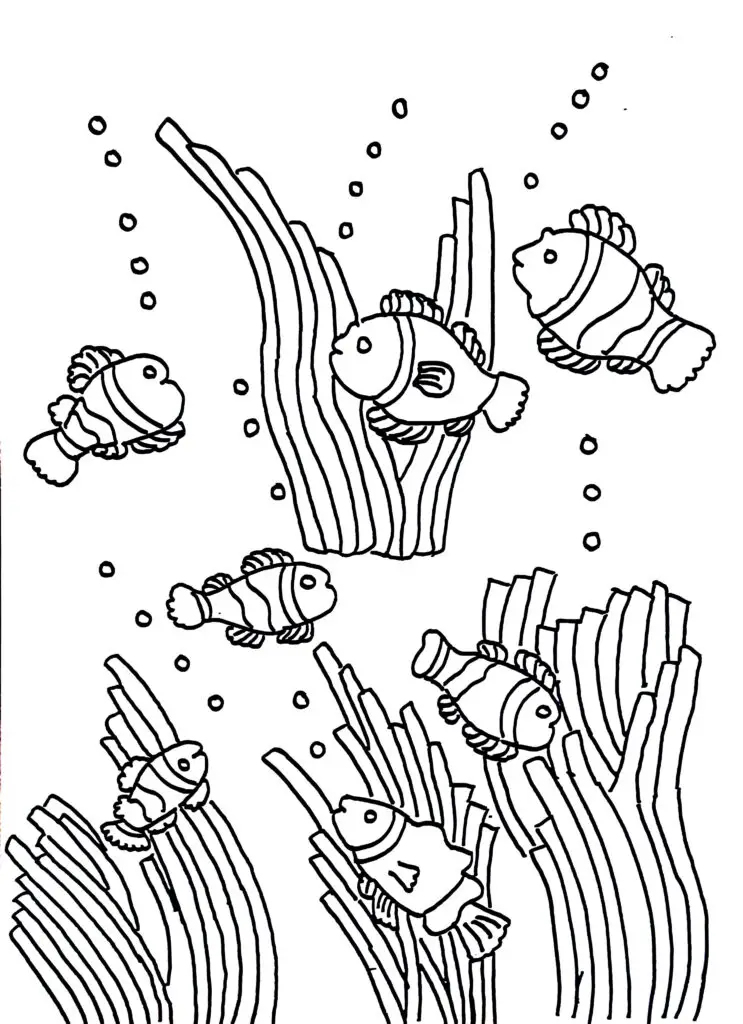
sea animal coloring pages - Clownfish

Facts about sea animals (Octopus characteristics)
1. How many hearts are there in an octopus?

The devil fish, well known as an octopus, has three hearts, two branchial hearts, and one central heart. The gills are the respiratory organs of a devil fish, of which blood requirements are fulfilled by the peripheral heart. All other organs’ blood requirements are fulfilled by the central heart.

2. Why does the octopus have blue-colored blood?

The octopus has blue-colored blood due to the presence of hemocyanin, a copper-based protein.

3. Do you know the word “octopus” originated from which language?

The word “octopous” originated from the Greek language. The Greek word “Oktopus” means “eight foot.”

4.  Who are the predators of octopuses?

Octopuses generally live in deep water. Some species of octopus live near the surface water. Deep sea animals are predators of the octopus, including  sharks, dolphins, moray eels, seals, sea otters, sperm whales, and large fish like groupers, and tuna are predators of octopus. Besides these animals, birds such as albatrosses and penguins also eat octopus.

5. What characteristics of octopuses make them different from other sea animals?

The octopus belongs to the class cephalopoda. Octopuses have an ink sac in their body. Ink fluid contained in an ink sac helps an octopus  defend itself from predators. When they shoot inky fluid in their surroundings, the water darkens, creating confusion among predators.  The Ink fluid, which consisting of mucus and melanin,  can reduces sight, smell, and taste  in other animals. Octopuses are able to regrow their lost limb. Octopuses can fully restore the lost appendages, including muscles, nerves, and suckers. The specialized cells are called blastema cells, which help them to regenerate lost organs.

References

https://en.wikipedia.org/wiki/Octopus

https://en.wikipedia.org/wiki/Cephalopod_ink

https://animals.howstuffworks.com/marine-life/why-is-octopus-blood-blue.htm


            To download PDF click here –  Facts about sea animals (Octopus characteristics)

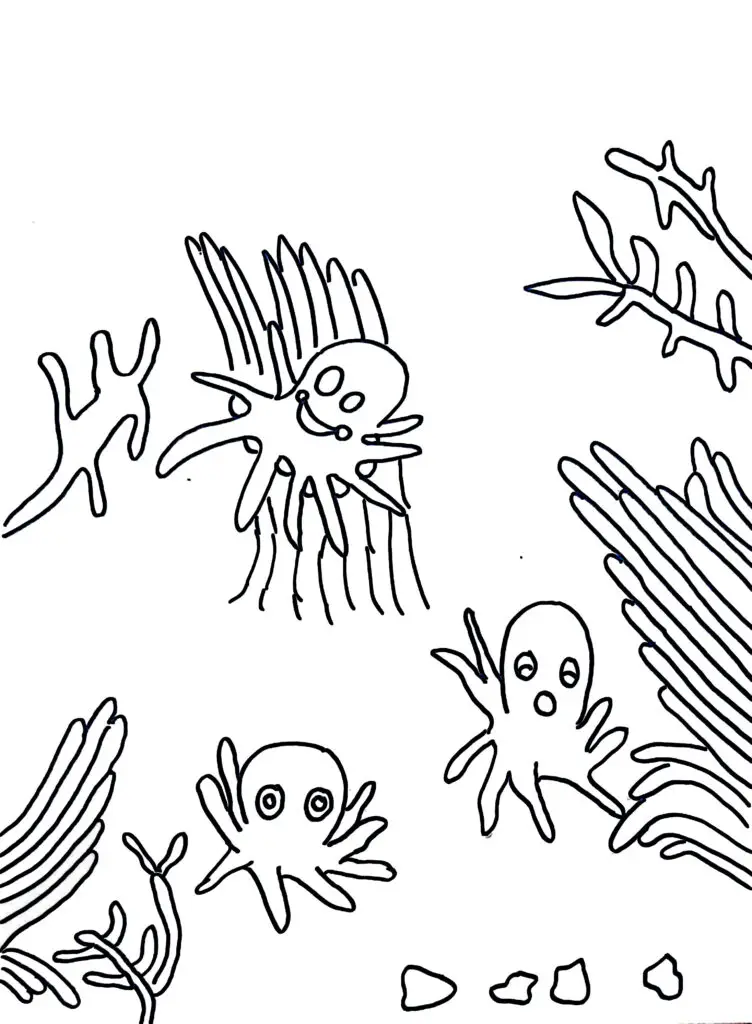
sea animal coloring pages - Octopus

Facts about sea animals (Fish)

1. Do you know whether there are vocal cords or not in fish?

 Fish do not have vocal cords. Fish communicate using other body organs. Some fish communicate by using a swim bladder, which is filled with gases. When a fish’s muscles vibrate, the swim bladder creates sound. This is how certain fish, like the sand sea trout and deep sea fish, communicate. There are certain types of fish that produce sound by changing speed or by changing swimming direction, a process called hydrodynamic sound technique. This is how fish, like catfish, killifish, and mexican tetra, communicate. Some fish create sounds by rubbing skeletal components with each other, a process called stridulation. This is how fish, like triggerfish, catfish, and other bony fish species, communicate.   

2. Do you know fish can change their color?

 Fish are able to change their color. The phenomenon is called physiological color change. Fish do this either to hide from their predators, adapt to the surrounding environment, give signals to other fish, or show emotions. The color change varies from green, red, yellow, orange, pink, and others.

3. Do you know about fish habitat?

Fish survive in every kind of water resource. Fish exist in a high mountain water stream, drying mud, a tropical pond, a geothermal spring, or the ocean. Some kinds of fish can live in hot water, while there are some kinds of fish that live in cold water. Antarctic icefish are able to survive in water below freezing temperatures. Antarctic ice fish produce antifreeze glycoprotein, and they can carry oxygen in their blood plasma instead of hemoglobin. The specialized feature helps them to survive below-freezing temperatures. 

References 

https://kids.britannica.com/scholars/article/fish/111049

https://en.wikipedia.org/wiki/Fish


                   To download PDF click here – Facts about sea animals (Fish)

Sea animal coloring pages - Deep water fish

Facts about sea animals (Fish characteristic)

1.Do fish have taste buds?

Just like other terrestrial animals, fish do have taste buds. However, their taste buds are not only present in the mouth but also throughout their body, including lips, fins, gills and barbels. The number and location of taste buds vary from species to species, depending on lifestyle, habitat, and feeding habits

2. How many species of fish are there all over the world?

All over the world there are about 34000 species of fish that are distributed in different habitats. The number of species of mammals, amphibians, reptiles, and birds altogether is less than the total fish species.

3. Do you know how fish can breathe?

A specialized structure found in the fish’s body is called a gill. A fish’s gills consist of two parts. These are the gill arches and the gill filaments. The filamentous structure present in the body of fish is known as the gill filaments and the structure that has blood vessels in it is known as the gill arch. 

Fish gills extract dissolved oxygen from water and release carbon dioxide into the surrounding environment, meaning they are the organ of respiration in fish. Besides that, fish gills also take part in osmoregulation and waste excretion. Fish gills play a role in maintaining water and ion balance through osmoregulation. Fish gills also remove nitrogenous waste material, such as ammonia, from the body of fish.

4. Do you know that most fish are cold-blooded animals?

     Fish are cold-blooded animals.  An animal where internal body temperature depends on the surrounding temperature is known as cold-blooded animals. External factors, such as water, affect the body temperature of cold-blooded animals. They are unable to generate heat or to regulate their internal body temperature. Most of the fish are cold-blooded animals, but there are some exceptions, such as tuna, mackerel sharks, and moon fish, which are warm-blooded  and able to regulate body temperature.

5. Do you know whether the fish are vertebrates or invertebrates?

Fish are vertebrates, not invertebrates. Vertebrates are animals that have a spinal cord or vertebral column. They have a brain  covered with a cranium, also called a skull, a closed circulatory system, a chambered heart, paired appendages, and a well-developed nervous system and excretory system. Vertebrate skin is covered with scales. They show bilateral symmetry; that means a vertebrate’s body is divided into two equal halves. 

References

https://animals.howstuffworks.com/fish/sunfish.htm

https://www.britannica.com/animal/fish

https://www.britannica.com/animal/fish/The-respiratory-system

https://www.britannica.com/science/cold-bloodedness

https://en.wikipedia.org/wiki/Warm-blooded


              To download PDF click here – Facts about sea animals (fish Characteristics)


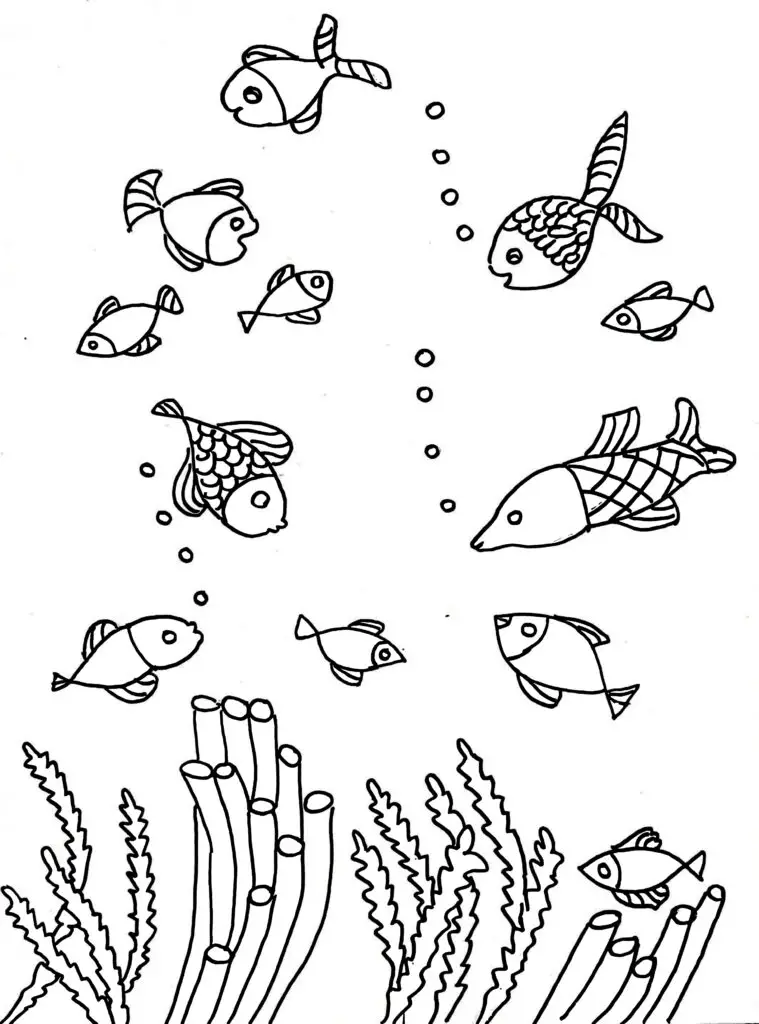
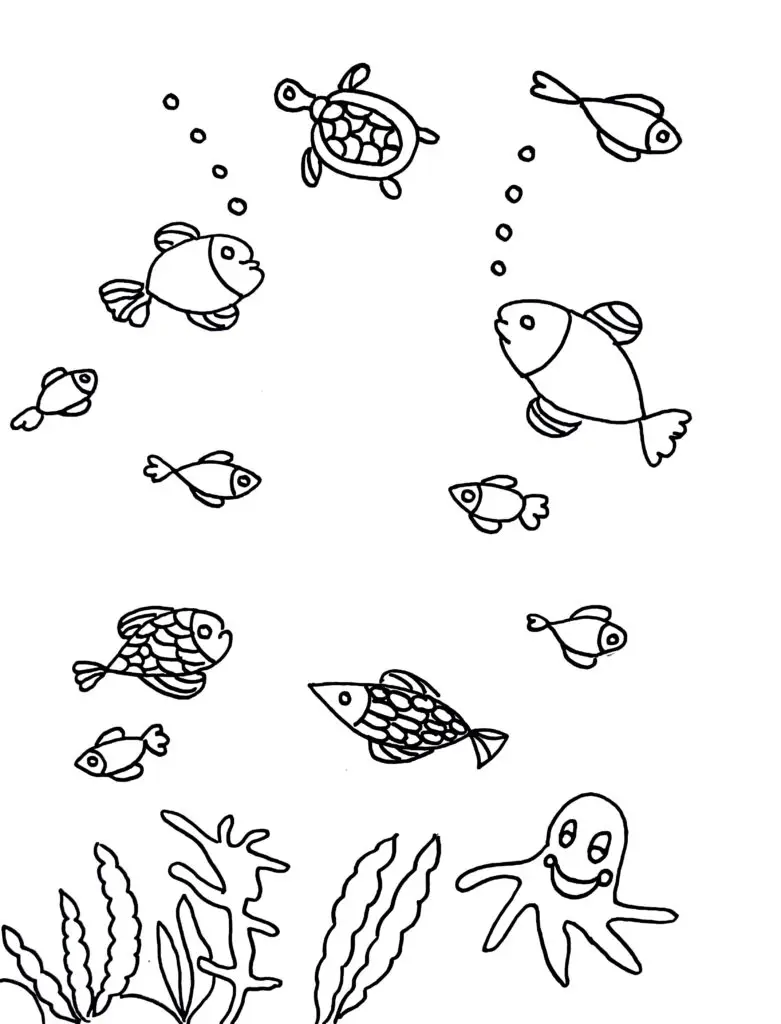
Sea animal coloring pages -Fish , turtle and octopus

Facts about sea animals (About Turtle)

1. Is a turtle an omnivore, carnivore, or herbivore? 

A turtle may be herbivorous, carnivorous, or omnivorous. Some species of turtle are carnivorous, some species are herbivorous, and some turtles are omnivorous. Generally, land-dwelling tortoises are herbivores, as they eat grasses, leafy plants, and flowers. Some aquatic turtle species eat jellyfish, mollusks, and insects and are thus carnivorous animals, while most of the aquatic turtle species eat both plants and animals and are thus omnivorous.  

2. When did the turtle first appear on Earth?

The turtle is one of the oldest reptiles. The oldest known fossil of a turtle with a fully developed shell is Proganochelys, which lived during the Triassic period. Turtles are believed to have originated from ‘Diapsid reptiles‘ during the Permian period. The oldest known ancestor of turtles is Eunotosaurus, which had broad flattened ribs, but the shell was absent. After the Triassic period, millions of years passed before the modern turtle shell fully developed.

3. What is the name of the oldest turtle?

It is Jonathan, of the island of Saint Helena, at the grand old age of 192. He belongs to the Seychelles giant tortoise species. He resides in the British Overseas Territory of Saint Helena in the South Atlantic Ocean.  

4. Which is the smallest species of turtle in the world?

The Speckled Dwarf Tortoise (Chersobius signatus) is the smallest turtle in the world, native to the western coastal region of South Africa. He has a small, flat, and freckled shell. The Speckled Dwarf Tortoise is 6 to 8 cm in length. They have five toes on their front feet. They are herbivorous animals. The weight is about 95 to 165 gm.

5. Which is the largest species of turtle in the world?

 The largest species of turtle in the world is known as the Leatherback sea turtle. They are about 2.2 meters in length. The Leatherback sea turtle weighs about 1540 lb. They have a flexible shell that is covered with leathery skin, while all other turtles have bony skin. They are found in tropical as well as in temperate oceans. They mainly eat jellyfish and soft-bodied animals.  

References
  • https://www.wikiwand.com/en/articles/Chersobius_signatus
  • https://www.britannica.com/animal/turtle-reptile/Origin-and-evolution
  • https://kids.britannica.com/students/article/leatherback-turtle/607675
  • https://www.britannica.com/animal/turtle-reptile
  • https://en.wikipedia.org/wiki/Turtle
  • https://en.wikipedia.org/wiki/Jonathan_(tortoise)


To download PDF click here – Facts about sea animals (About Turtle)

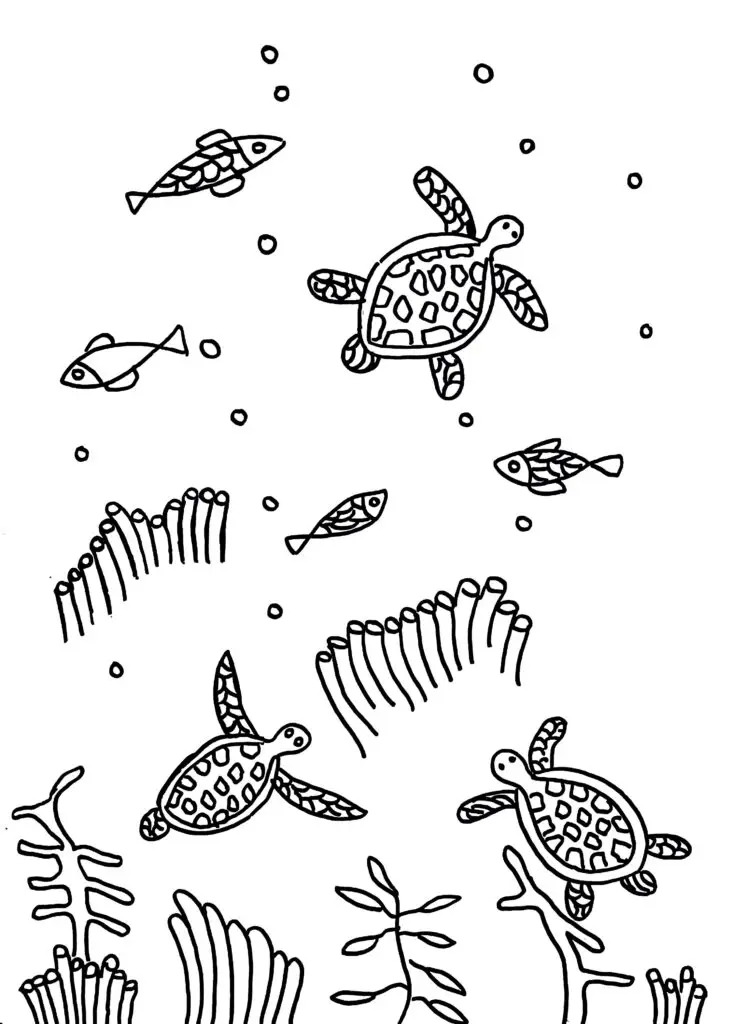
Sea animal coloring pages - Sea turtles and fish

Facts about sea animals (Dolphin facts)

1. Dolphins evolved from which animal?

Historically, dolphins’ ancestors did not live in water. Their ancestors were land-dwelling mammals belonging to the order Artiodactyla, even-toed ungulates, who had hooves at the end of each foot. Eventually, these animals shifted from the land to an aquatic environment in which to live. Dolphins evolved from these land-roaming mammals.

2. What is the lifespan of Dolphins?

There is variation in the lifespan of dolphin species; smaller dolphin species have an average lifespan of about 20 years, while large dolphins have a lifespan of about 80 years.

3. Which is the largest species of dolphin?

Among all the species of dolphin, the Orca, or Killer whale, is the largest one. Killer whales are about 32 feet in length and weigh about 10000 kg, and they are black and white. They are found in oceans throughout the world, in both polar and tropical regions.

4. Which is the smallest dolphin species?

The Hector’s Dolphin is the smallest dolphin species. They are about 5.2 feet in length and weigh about 40 to 60 kg, have rounded dorsal fins and are mainly found in shallow and coastal waters of New Zealand.

5. How many species of dolphins are there all over the world?

There are about 40 species of dolphins that are distributed all over the world.

References

https://en.wikipedia.org/wiki/Dolphin

https://www.britannica.com/animal/dolphin-mammal

https://en.wikipedia.org/wiki/Orca

https://kids.britannica.com/scholars/article/killer-whale/45439

https://en.wikipedia.org/wiki/Hector%27s_dolphin


                        To Download PDF click here – facts about sea animals (Dolphins)


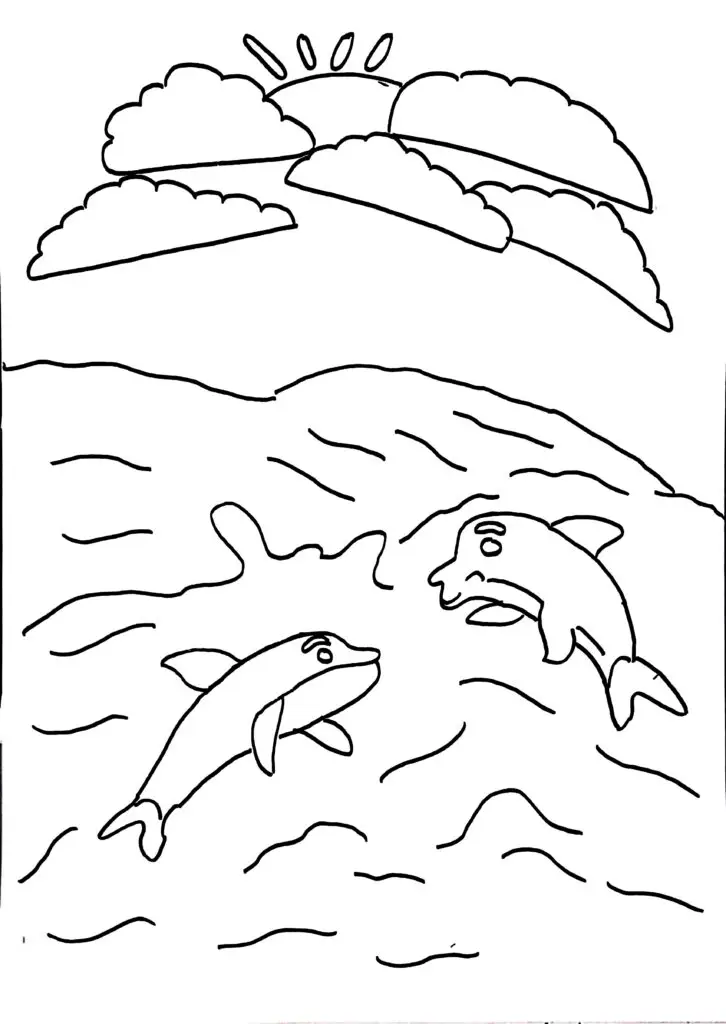
Sea animal coloring pages- Dolphins

Leave a Comment

Your email address will not be published. Required fields are marked *

Scroll to Top