colouringpages-psart.com

The holiday season brings with it a wonderful chance to slow down, bond with loved ones, and spark creativity—and holiday coloring pages are a delightful way to do just that. With beautifully designed scenes covering Christmas trees, snowmen, menorahs, festive feasts, and more, these pages are available in PDF format, allowing your readers to download, print, and color at their convenience. Sharing them in your post means families everywhere can quickly bring holiday cheer to their homes.

Beyond the joy of coloring, these pages can be educational. We incorporate interesting facts about holiday traditions, folklore, and symbols—did you know that the modern Christmas tree custom is thought to have started in 16th‑century Germany? Or that the menorah used during Hanukkah recalls a miracle in which temple oil lasted eight days? When coloring a festive design, readers may pause to absorb these little tidbits, turning a simple page into a learning moment.

This post will guide your audience through themed holiday coloring pages—each paired with a unique interesting fact and downloadable PDF version. Whether your readers are helping kids decorate holiday cards or crafting mantel displays, these coloring sheets will delight. These printable PDFs can be used in classrooms, homes, community centers, or as quiet-time activities.

So get ready to offer six festive, fact‑filled coloring experiences. Below, you’ll find which holidays are represented, preview images, links to download the PDFs, and suggestions for how to turn the finished art into keepsakes or gifts. Let creativity and holiday lore meet in every colorful stroke.


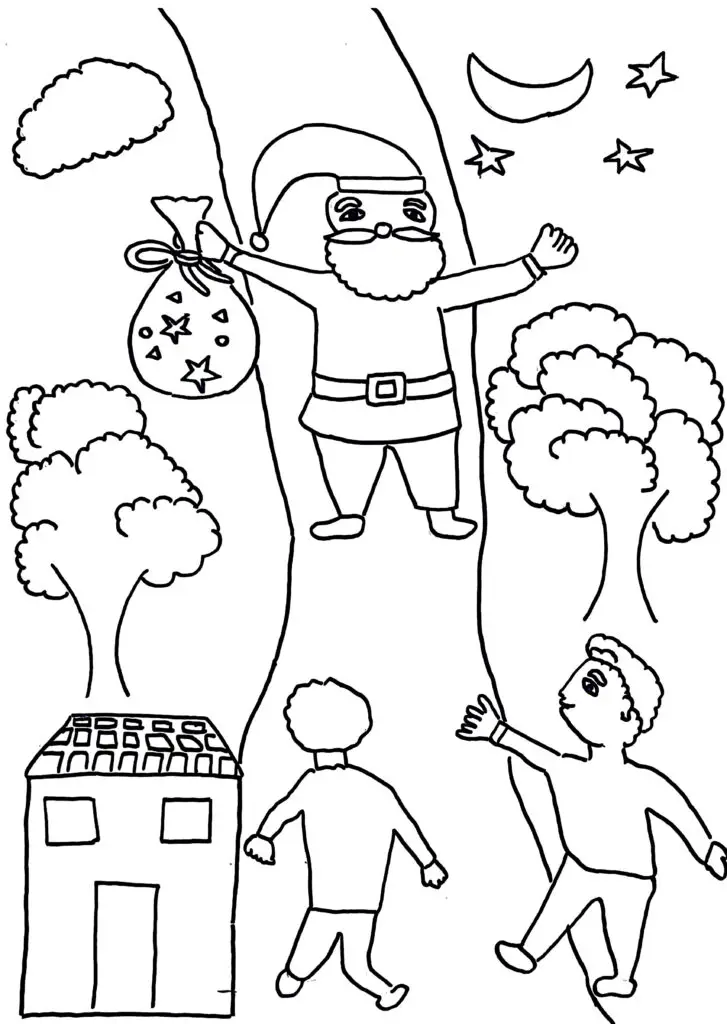
Holiday coloring pages - Santa Claus

             Interesting facts (history about Santa Claus)

  1. Do you know about the origin of Santa Claus?

 According to documented evidence, Saint Nicholas was a bishop in the fourth century in Turkey. “Saint Nicholas was renowned for his kindness.” He always served people who were needy and unhappy. “The American version of ‘Saint Nicholas’ is ‘Santa Claus’.”

2. The word “Santa Claus” originated from which language?

 The word ‘Santa Claus’ originated from  the Dutch word ‘SinterKlaas’. Traditionally, Sinterklaas was a lean person who wore a bishop’s hat and robe. The figure of Sinterklaas is based on the 4th-century Greek bishop Saint Nicholas. He was traditionally shown wearing   the elaborate robes and miter (hat) of a bishop.

3. Who invented the modern illustration of Santa Claus?

 Thomas Nast  was responsible for the modern illustration of Santa Claus. His illustration was inspired by Saint Nicholas and the poem “Twas the Night Before Christmas.”    

4. Who brought the tradition of Santa Claus to the United States of America?

It was Dutch immigrants who brought the tradition of Sinterklaas to the United States of America in the seventeenth century.

5. Did Santa Claus appear in an advertisement?

 In 1931, Santa Claus appeared in an advertisement shown by the Coca-Cola company that ran in famous magazines like The Saturday Evening Post. Haddon Sundblom  was the illustrator who created  a friendly, plump, and human Santa.

  References

https://en.wikipedia.org/wiki/Saint_Nicholas

https://en.wikipedia.org/wiki/Santa_Claus

https://www.britannica.com/topic/Santa-Claus

https://en.wikipedia.org/wiki/Thomas_Nast

https://www.illustrationhistory.org/artists/thomas-nast

https://en.wikipedia.org/wiki/Clement_Clarke_Moore

https://www.illustrationhistory.org/artists/haddon-sundblom


To download PDF click here – Interesting facts (Historical facts about Santa Claus)

Holiday coloring pages- Diwali festival

Interesting facts (About an Akash Deep or sky lantern)

1. What did Akash Deep (or sky lantern) symbolize?

The Akash Deep (or Sky lantern) symbolizes the conquest of light over darkness. It is believed to attract prosperity, wealth, divine grace, and the blessing of ancestors.

2. When was the tradition of lighting an Akash Deep (or Sky lantern) started?

There are multiple stories about the origin of Akash Deep. According to one story, the tradition of lighting an Akash Deep began at the end of the Kurukshetra war, which lasted about 18 days. It was used to honor the souls of the dead soldiers.  Another theory is that the concept of Akash Deep originated in the Tretayuga, and it was first lit in Ayodhya to celebrate the return of King Ram after his exile.

3. What was the shape of the original Akash Deep?

The traditional Akash Deep was a clay pot with a lamp inside that was lit with ghee. The light from the lamp spread through circular holes, illuminating the surroundings. Traditionally, the Akash Deep was kept outside during the Diwali festival and was hung from a bamboo pole. Nowadays, Akash Deeps come in many different shapes, including stars, globes, hexagonal, cubical and cylindrical designs. Frames for modern Akash Deeps are made from materials like bamboo sticks, thin wooden dowels, or cardboard strips, brass, aluminum, iron, or steel and are enclosed with translucent colored paper, such as tissue, handmade, recycled, or kite paper. Today, electric bulbs are used instead of ghee light.

4. Can you tell me what language the name Akash Deep (Sky lantern) originated from?

 The term Akash Deep originated from a combination of two different Sanskrit words, Akash, which means sky, and Deep, which means lamp, which together mean “light of the sky.”

5. In which festival is there a tradition of lighting an Akash Deep?

In India, there is a tradition of lighting an Akash Deep during the Diwali festival. The lighting of the Akash Deep is observed throughout the Kartik month and begins around Kartik Purnima.

References

https://www.wikiwand.com/en/articles/Kandeel

https://en.m.wikipedia.org/wiki/Kandeel

https://kids.nationalgeographic.com/pages/article/diwali

https://www.news18.com/lifestyle/diwali-2023-know-history-and-significance-of-lighting-aaksh-deep-8652104.html


To download PDF click here – Interesting facts (about an Akashdeep or sky lantern)

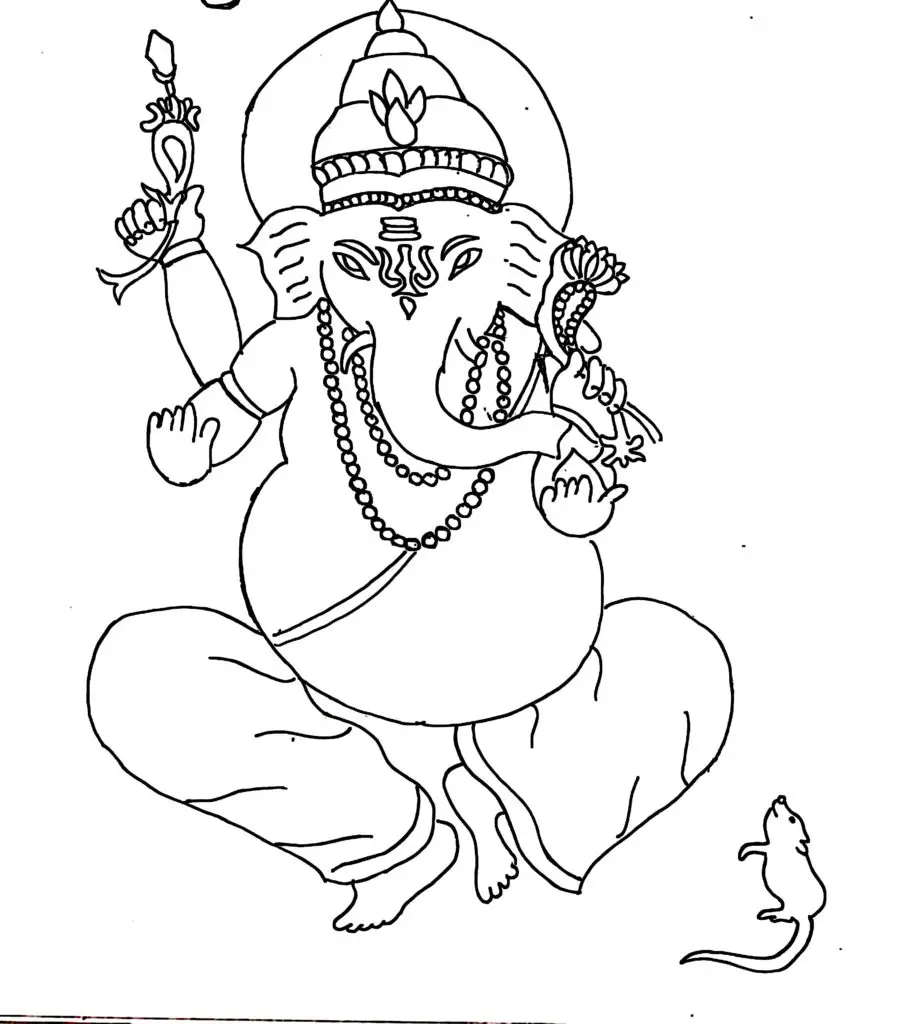
Holiday coloring pages -Lord Ganesh

Interesting facts (About Lord Ganesh)

1. What is symbolized by Lord Ganesh’s ride, the mouse?

The mouse represents human desires and ego. Lord Ganesh, by riding the mouse, shows his control over both desire and ego. The moral is that humans should remain humble and not let their desires control their lives. Since a mouse can pass anywhere, even from a very small opening, it symbolizes that Lord Ganesh can pull out the smallest hurdle in a human’s life.

2. What does the name ‘Ganesha’ mean?

The name Ganesha represents both ‘Lord of the people’ and Lord of the Ganas. ‘Gana’ means ‘common people’ and ‘Ganas‘ are the small grotesque (goblin) hosts of shiva. 

3. How many names does “Lord Ganesh” Have?

Lord Ganesh has 108 names which have their own meaning.

4. What is symbolized by the objects in the hand of “Lord Ganesha”?

“Each object that is present in Lord Ganesha’s hands has a specific meaning: The axe is used to cut off attachment and ward off negativity; The lotus flower represents spiritual purity, enlightenment, and detachment from material concerns; The Pasha gives the power to bind negative forces, and control worldly attachments; The modak is a reward of spiritual knowledge and the bliss of self-realization.

5. Do you know the story behind the broken tusk of Lord Ganesh?

Once, the Maharishi Vyasa wanted to dictate the epic, the Mahabharata, to a scribe. Lord Ganesha accepted to write down the epic for Maharishi Vyasa, but on one condition: Vyasa must chant the entire epic without interruption. Maharshi Vyasa accepted it, but with a counter-condition: Ganesha had to fully understand every verse before writing it. As Ganesha wrote, his pen broke. To avoid interrupting Maharshi Vyasa’s continuous dictation, Ganesha broke off his own tusk and used it as a pen to complete the epic. This act of Lord Ganesha teaches us about commitment, sacrifice, and the ability to make a quick and decisive choice for the greater good. Humans should learn to persevere and sacrifice for their tasks, even when faced with tough times. Upholding one’s commitment ultimately leads to the achievement of goals and the fulfillment of one’s responsibilities.  

References 
  • https://www.britannica.com/topic/Ganesha
  • https://www.speakingtree.in/blog/lord-ganesha-and-his-mushak
  • https://timesofindia.indiatimes.com/life-style/soul-search/why-did-lord-ganesha-choose-a-mouse-as-his-vehicle/photostory/124283316.cms
  • https://en.m.wikipedia.org/wiki/Mythological_anecdotes_of_Ganesha


To download PDF click here – Interesting facts (About Lord Ganesh)

Holiday coloring pages - Santa Claus

Fun and Interesting Facts (Historical facts about Christmas celebration)

1. Do you know that Christmas is not celebrated on 25 December all over the world?

Christmas is the festival of Christians that is observed by many, but not all, around the world on December 25th. Some countries in the world celebrate Christmas on a different day. In Ethiopia, Egypt (Coptic Orthodox), Georgia, Kazakhstan, and Serbia, Christmas is celebrated on the January 7th. The Christmas celebration dates vary due to the use of a different calendar. This is because the Orthodox Church uses the Julian calendar, which is 13 days behind the Gregorian calendar

2. Do you know where the Christmas tree was first seen?

In the 16th century, this tree was seen for the first time in Germany.  German people decorated this tree with nuts and fruits. The Christmas tree symbolizes new life

3. Have you heard of Norway’s Christmas tradition? 

Every year since 1947, Norway  has sent a Christmas tree to London as a token of appreciation for Britain’s  support during World War II, which  is displayed in Trafalgar Square . 

4. Was Jingle Bells  originally a Christmas song?

Jingle Bells was not actually composed as a Christmas song. James Lord Pierpont wrote the song, titled “One Horse Open Sleigh,” for a Thanksgiving giving show in America, and it later became a Christmas song.

References 

https://en.wikipedia.org/wiki/Observance_of_Christmas_by_country

https://www.bbc.co.uk/newsround/59905614

https://en.wikipedia.org/wiki/Coptic_calendar

https://www.britannica.com/plant/Christmas-tree

https://en.wikipedia.org/wiki/Trafalgar_Square_Christmas_tree

https://en.wikipedia.org/wiki/Jingle_Bells

https://people.howstuffworks.com/culture-traditions/holidays-christmas/christmas-songs.htm


To download PDF click here – Fun and interesting facts (Historical facts about Christmas celebration)


Holiday coloring pages- Christmas

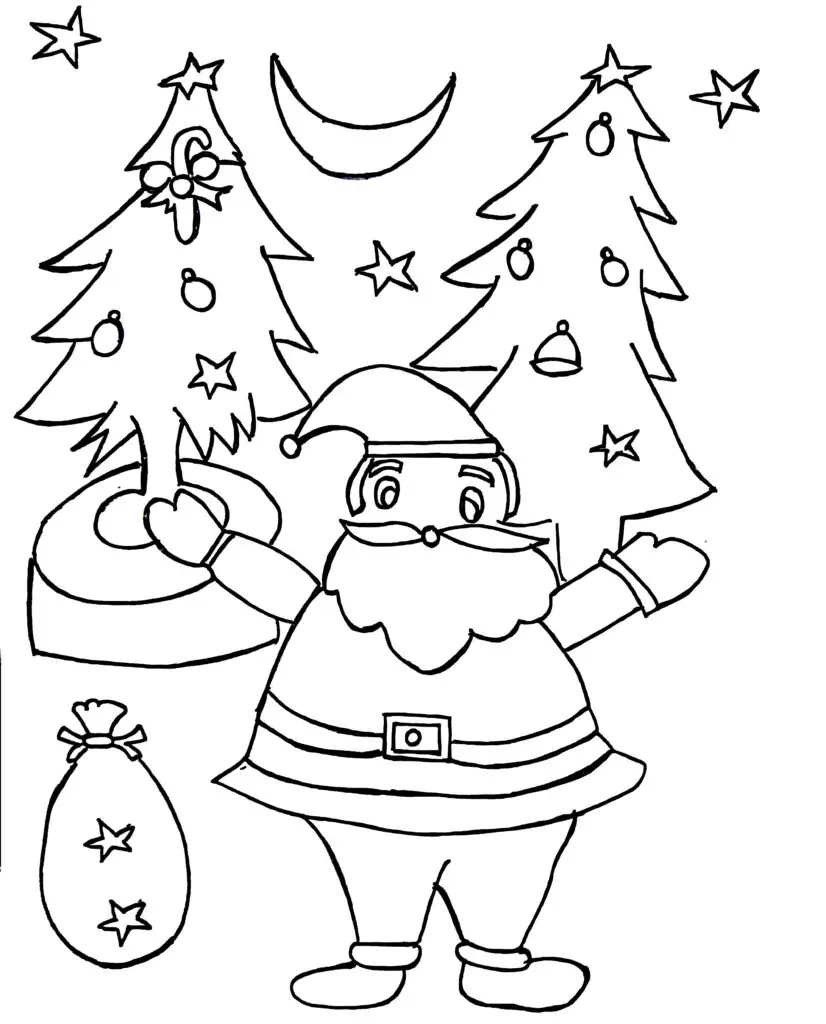
Holiday coloring pages – Santa Claus

Santa Claus stands proudly in front of a glowing Christmas tree, his red suit vivid against the snowy night. His large gift bag rests at his side, ready for delivery. Stars twinkle above, lighting the sky with silver sparks. Santa smiles. Santa listens. Santa waits. His boots crunch quietly as he shifts, eyes scanning the sky for his next stop. A calm hush blankets the world, broken only by the gentle rustle of branches in the breeze.

The stars shine down like tiny beacons, blessing the night with wonder. Every detail feels magical. Every second holds promise. Every star seems to whisper joy. Santa Claus is ready, and Christmas has begun.

This heartwarming scene could be captured perfectly in a Christmas coloring page—a festive image filled with twinkling stars, snowy trees, and Santa’s jolly presence, inviting children and adults alike to bring the holiday spirit to life with every stroke of color.

Holiday coloring pages- Friendship day

Interesting facts (About International Day of Friendship)

1. Who first proposed the idea of celebrating World Friendship Day?

 Dr. Ramon Artemio Brocho first proposed the idea of celebrating World Friendship Day, and he wished that there would be a worldwide holiday to celebrate it.     

2. What is the World Friendship Crusade?

The World Friendship Crusade is an international non-governmental organization founded by Dr. Ramon Artemio Brocho and friends in 1958. The primary goal of the organization is to encourage friendship and fellowship among the people. Because of the organization’s work, the United Nations officially announced July 30th as the International Day of Friendship in 2011.

3. Who first initiated the idea of celebrating national Friendship Day?

The idea of a National Friendship Day was first started by the founder of Hallmark Cards, Joyce Hall, in 1930. He proposed to celebrate National Friendship Day by sending cards to friends but the concept did not get widespread support.

4. When was the world’s ambassador of friendship named?

The United Nations named Winnie-the-Pooh as the world’s ambassador of friendship in 1998 with the aim of encouraging friendship and getting to know different cultures. The concept was established by Nane Annan, wife of UN Secretary-General Kofi Annan. As Pooh and his friends help each other in each and every situation, the character was selected as the world ambassador of friendship. Winnie-the-Pooh, the character, was created by A.A. Milne.

References 

https://www.un.org/en/observances/friendship-day

https://en.wikipedia.org/wiki/World_Friendship_Crusade


To download PDF click here – Interesting facts (About International Day of friendship)

Leave a Comment

Your email address will not be published. Required fields are marked *

Scroll to Top