colouringpages-psart.com

Free Printable Coloring Pages: A Fun and Educational Creative Outlet

Free printable coloring pages are a wonderful means for anyone who is looking for a fun, engaging, and low-cost activity. “There is a need for just a printer and some crayons, or colored pencils, which open up a world of creativity.” “These pages come in all kinds of themes, like animals, nature, holidays, cartoons, letters, and even complex mandalas that make them suitable for all ages and interests.”

Did you know that coloring improves fine motor skills and hand-eye coordination in young children? It also helps build focus, patience, and attention to detail. For adults, coloring is now recognized as a relaxing, meditative activity that can reduce stress and promote mindfulness. We also incorporated interesting facts along with coloring pages to make it interesting.

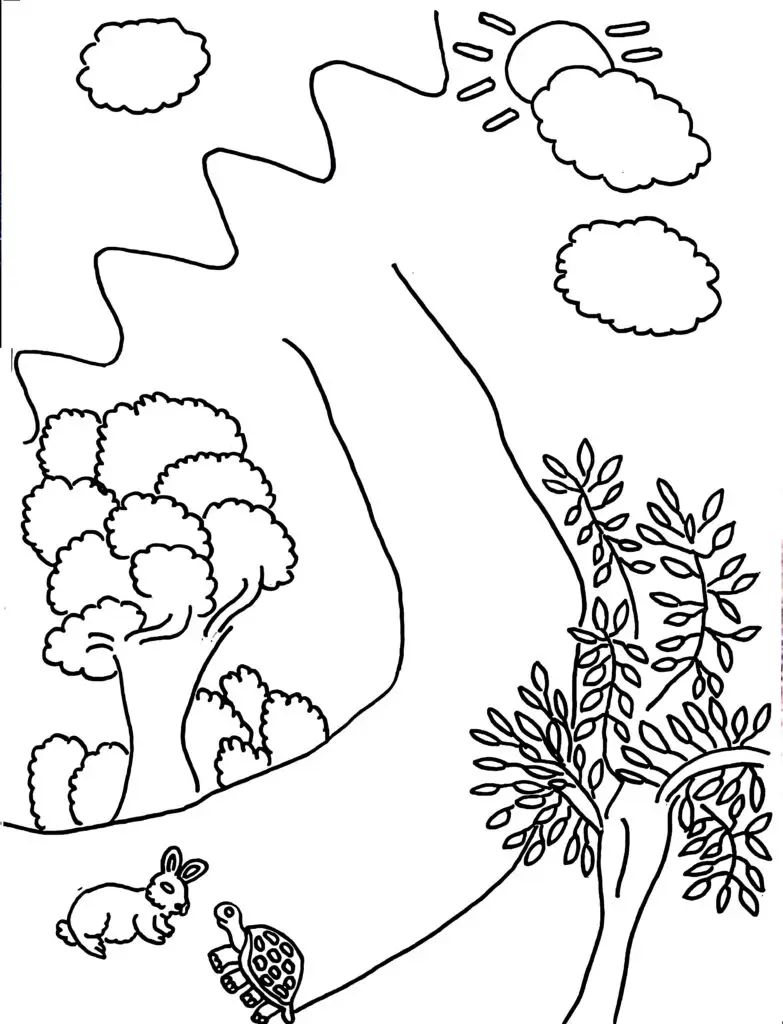
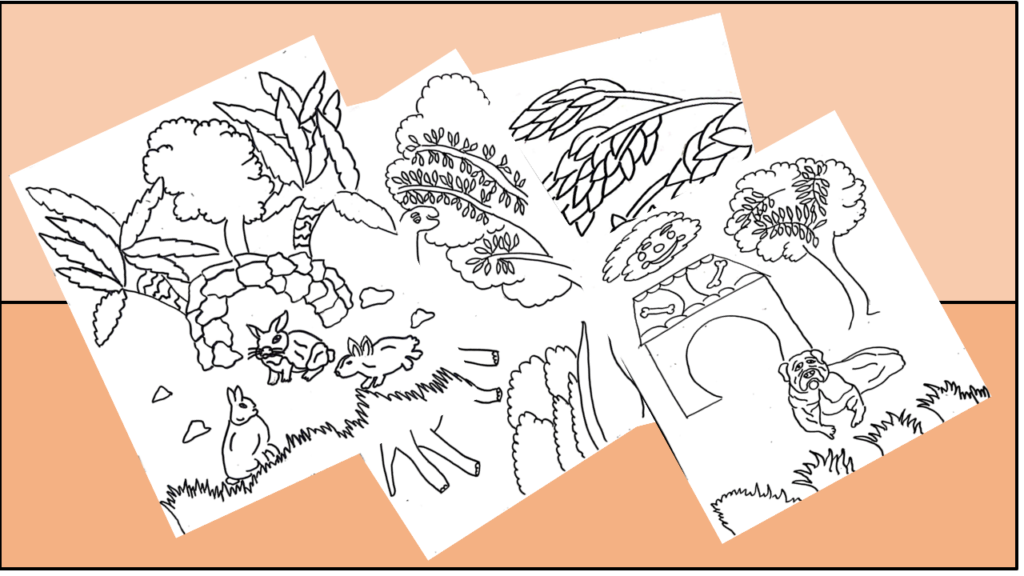
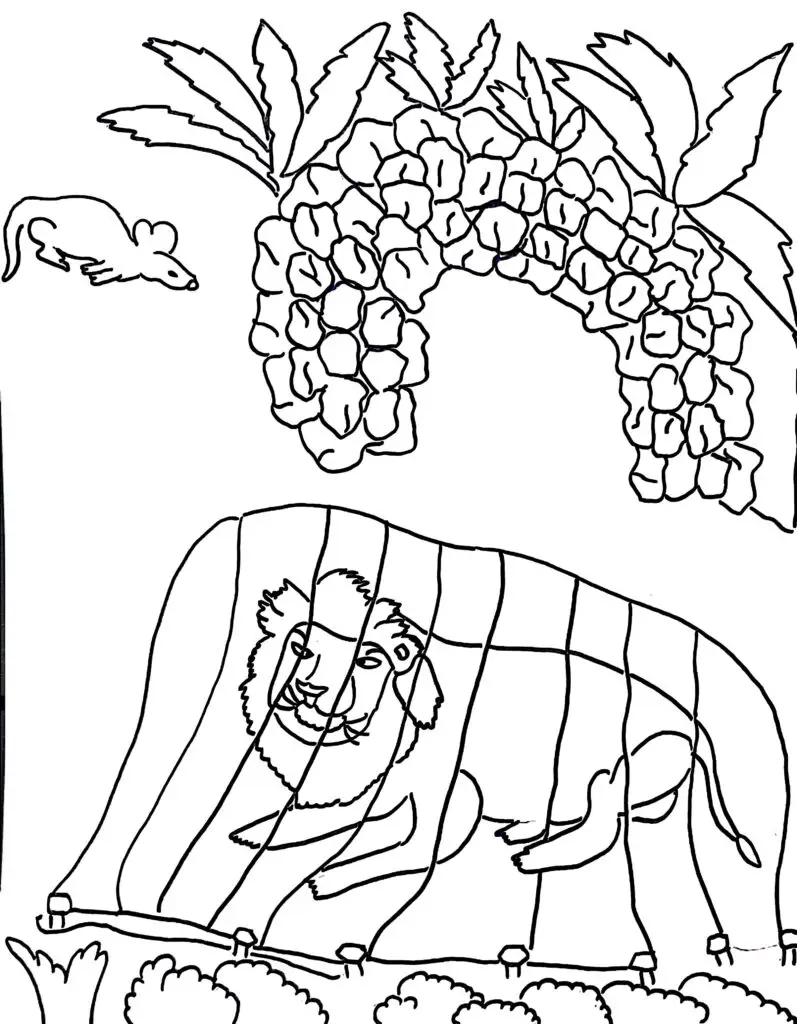
Free printable coloring pages - The Tortoise and the Hare

Interesting facts (About The Tortoise and the Hare fable)

1. Do you know who was the author of “The Tortoise and the Hare” fable?

“An ancient Greek storyteller named Aesop wrote the tale of ‘The Tortoise and the Hare.'” Aesop resided in Ancient Greece between 620 and 564 BCE. Many versions of the original story have been created by different people all over the world.

2. Do you know about the Perry index?

Aesop’s story has been arranged properly in the Perry index. The Perry index was created by professor Ben Edwin Perry (1892–1968) in his work Aesopica (1952). “Perry did the sorting by language (Greek, then Latin) and then by chronological order and earliest known source, with an alphabetical arrangement used as a final ordering within those sections.”

3. Do you know about Eric Carle?

Eric Carle was famous for creating storybooks that featured not only a story as text but also interesting illustrations. Eric Carle is among those who brought Aesop’s fable to life. In 1980, he released Twelve Tales from Aesop, which he both retold and illustrated.” Carle’s retelling is characterized by his signature colorful collage-style artwork, which brought new visuals to these classic stories.

4. What is the moral of The Tortoise and the Hare story?

  The tortoise and the hare teach us the lesson that steady and slow work can lead to success. It is not necessary that fast or strong work leads to success.

References

https://kids.britannica.com/scholars/article/Aesop/3883

https://en.wikipedia.org/wiki/Aesop

https://www.wikiwand.com/en/articles/Perry_Index

https://en.wikipedia.org/wiki/Perry_Index

https://en.wikipedia.org/wiki/Eric_Carle

https://kids.britannica.com/scholars/article/Eric-Carle/623300

https://en.wikipedia.org/wiki/Perry_Index


To  download PDF click here – Interesting facts (About the Tortoise and the Hare Fable)

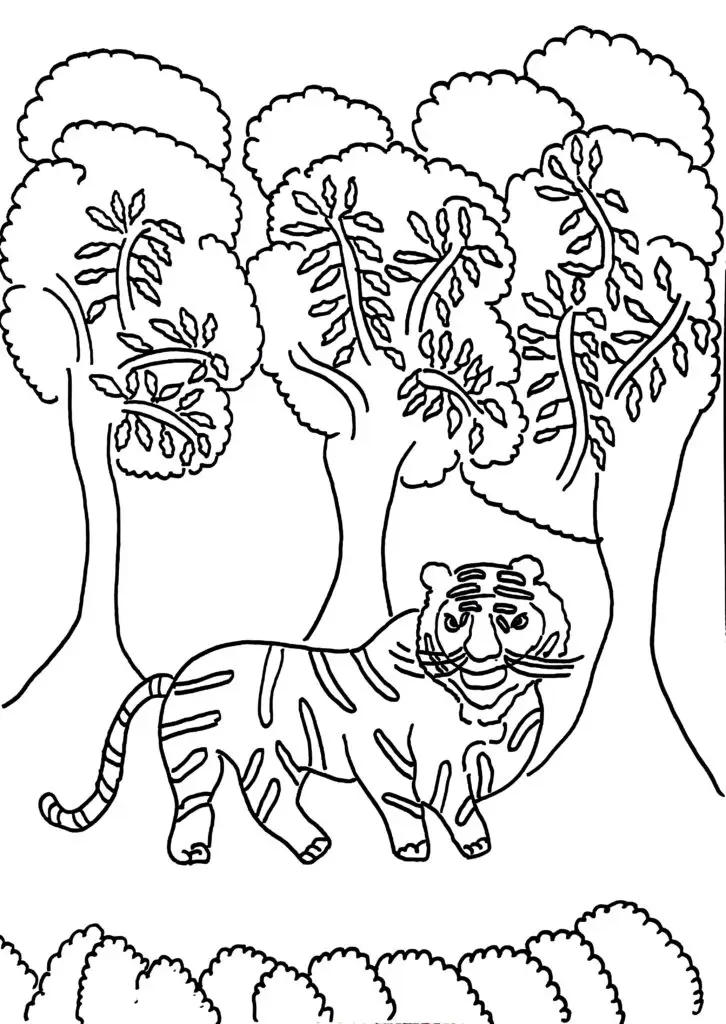
Free printable coloring pages - Tiger

Interesting facts (About Siberian tiger)

1. What are the other names for the Siberian tiger?

The Siberian tiger is also known by various other names, including the Amur, the Manchurian, the Korean, and the Ussurian tigers. The name Amur tiger comes from the Amur River region, where it is found. The Manchurian comes from the Manchuria region of northeastern China. Historically, they were also found on the Korean peninsula and also deeply rooted in Korean traditions as a symbol of power, strength and national identity, which is why they are known as Korean tigers. They are also found near the Ussuri River in eastern Russia, hence the name Ussurian tigers.

2. Why is the Siberian tiger’s night vision stronger than that of humans?

The Siberian tigers have a greater number of rods in their eyes than humans. The increased number of rods allows the Siberian tiger to detect the movement of its prey at night when color vision is ineffective. The Siberian tigers have a structure named tapetum lucidum, which is present behind the retina of the eye, which helps them to view other animals in low-light conditions.

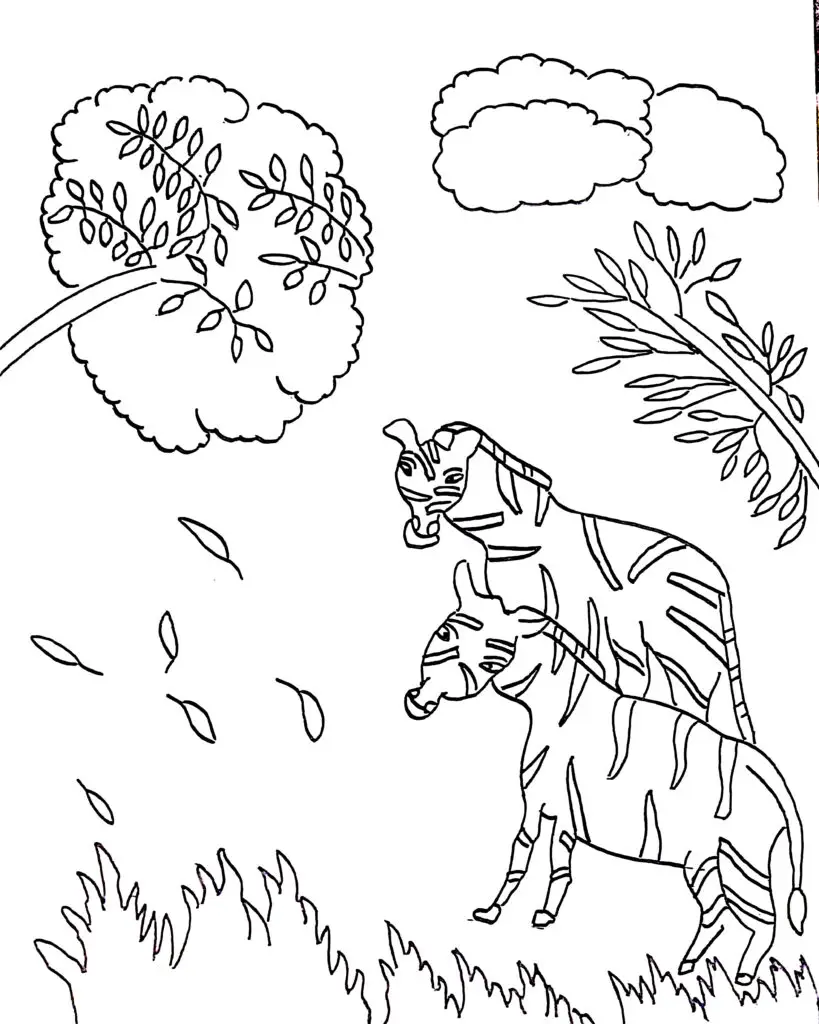
3. Which is the only species of tiger that survives in snow?

The Siberian tiger species has the ability to withstand extreme freezing temperatures.  They have adapted with a thicker, longer fur coat and additional fat layers to fight against the cold. Their fur coat becomes longer and thicker, and their paws develop a thick fur pad, called winter boots, which keep them alive in cold temperatures.

References

https://www.britannica.com/animal/Siberian-tiger

https://en.wikipedia.org/wiki/Siberian_tiger


To download PDF click here – Interesting facts (About Siberian tiger)

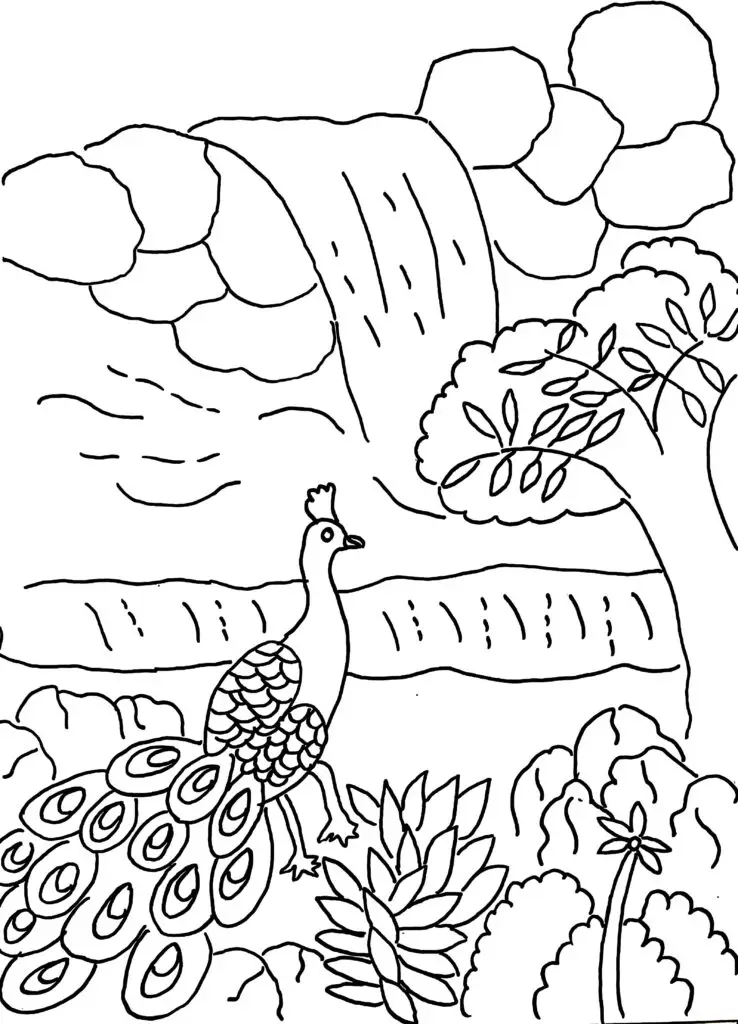
Free printable coloring pages - A peacock near a waterfall

Interesting facts (About Peafowl)

1. How many subspecies of green peafowl are there? 

There are three known subspecies of green peafowl: a) Java Peafowl, b) Indo-Chinese peafowl, and c) Burmese Peafowl.

 a) Java Peafowl (Pavo muticus muticus ): Males have green and golden feathers on the neck, chest, and back, with eye-like spots, called ocelli, on their long feathers. Females have reddish-brown feathers on their backs and wings. Both sexes have a fan-shaped crown of feathers on their head. They are native to the island of Java and other parts of Indonesia. 

b) Indo-Chinese Peafowl (Pavo muticus imperator): They are native to Southeast Asia, including China, Myanmar, Thailand, Laos, Cambodia, and Vietnam, and have muted green-bronze feathers on their body, neck, and wings.

c) Burmese Peafowl (Pavo muticus spicifer): Their crest and neck are green colored, and are dullest among the three subspecies. They are native to northwestern Burma, parts of India, and Bangladesh.  

2. What is the historical significance of green peafowl? 

In ancient Burma, the green peafowl was a symbol of the monarchs. The green peacock was on the flag of the governor at the time of British rule in Burma. It was also on the flag of the state of Burma, from 1943-1945. It was the coat of arms of Myanmar’s last kingdom, called the Konbaung kingdom.


References 

https://en.wikipedia.org/wiki/Green_peafowl


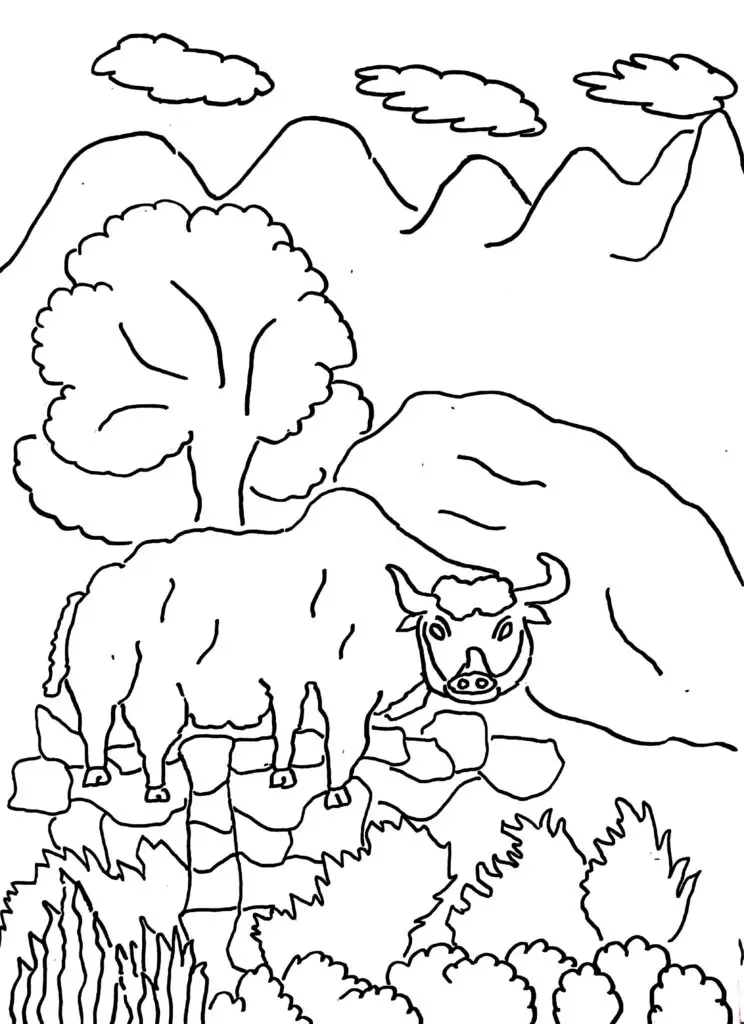
On this page of free printable coloring pages, there is a yak.

free printable coloring pages - Yak

Interesting facts (Some facts about yak)

1. What is the use of yak butter?

Yak butter has various applications, including in the preparation of food and beverages, cultural and religious applications, and in the manufacturing of various products like cosmetics. It is applied in the preparation of yak butter tea, which is made by beating butter, brick tea, and salt. It is useful in cold weather and also to hydrate the body. Tsampa is a food where butter is mixed with roasted barley flour to create dough. It is also applied in the preparation of sculptures of animals and landscapes in the traditional festivals. It is utilized as fuel to light butter lamps during festival time. It is used as a moisturizer in moisturizing creams.

2. What do you mean by yak alcohol?

Yak alcohol is a traditional alcoholic beverage that is made using fermented yak milk.  It involves the fermentation of yak milk with the help of lactic acid bacteria and yeast. In the process, lactose is converted into lactic acid, and a small quantity of ethanol is produced. Milk wine, kurut, and Shimiin are examples of such products.

3. Why does Yak milk appear pink?

When a baby yak is born, the mother’s first milk has some amount of blood, and this blood imparts a pink color to the milk. This milk is called colostrum and is rich in protein. The color change is temporary, and milk returns to its normal white color after some time.

4. How fast can Yaks run?

Yaks can run at a speed of 25 mph. In some regions that are situated at high altitudes, such as Tibet, Mongolia, Kazakhstan, and Ladakh, domesticated yak racing takes place during the traditional festivals.

5. What is distinctive about yak?

A yak’s body is covered with a thick, hairy coat, which plays a role in insulation for cold environments. They have a higher lung capacity than cattle. A yak’s lungs are supported by 14–15 pairs of ribs when compared to cattle, which have only 13 pairs of ribs. They also possess a large chest cavity, which supports breathing at high altitude. They have a greater number of red blood cells and a larger heart compared to cattle. A yak’s hemoglobin shows higher affinity for oxygen, and its anatomy is such that it can rapidly intake a large quantity of oxygen.

References 

https://en.wikipedia.org/wiki/Yak

https://www.britannica.com/animal/yak

Yak Butter Tea

https://en.wikipedia.org/wiki/Yak_butter


To download PDF click here – Interesting facts (Some facts about yak)

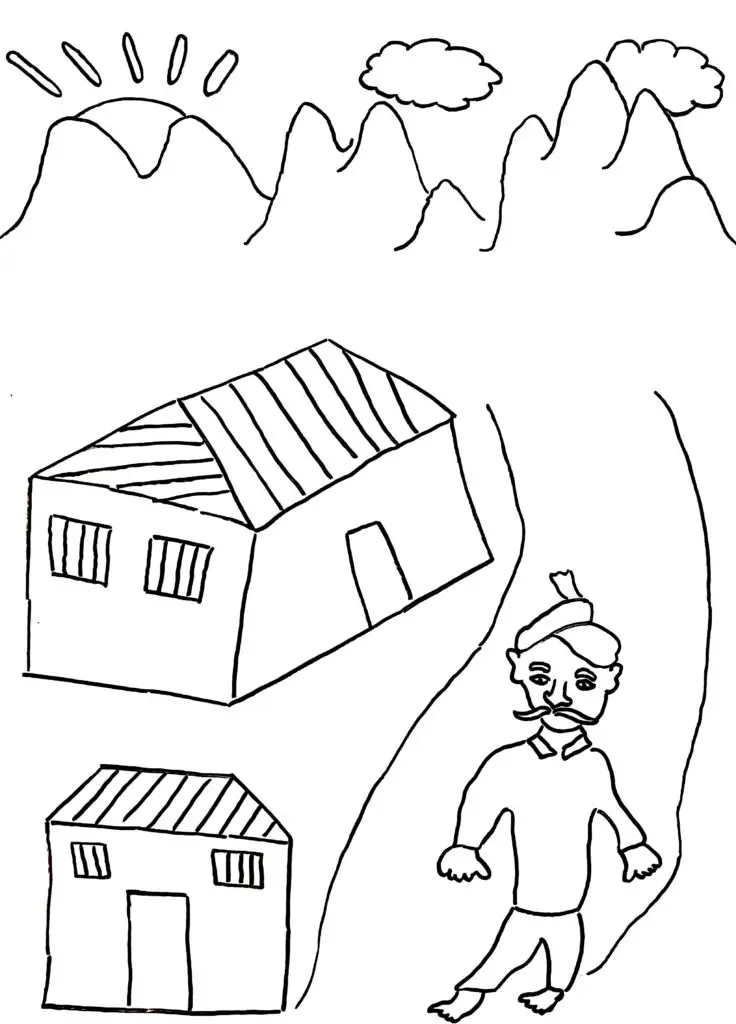
Free printable coloring pages- a village near a mountain.

Interesting facts (About highest, longest, oldest and smallest Mountain)

1. What is the name of the world’s highest mountain above sea level?

 Mount Everest, situated in the Mahalangur Himal region of the Himalayas, is the highest mountain. It measures about 29,032 feet (8,848.86 meters) in height. It is also known by the names Sagarmatha (Nepali) and Chomolungma (Tibetan).

2. What is the name of the longest mountain range in the world above sea level?

The Andes Mountain range, which is situated on the western coast of South America, is the longest mountain range in the world. It measures a length of about 8900 km (5530 miles). It covers several countries, including Colombia, Venezuela, Peru, Bolivia, Chile, Argentina, and Ecuador.

3. Which is the oldest mountain range in the world?

The Barberton Makhonjwa Mountains, which are situated in South Africa and Eswatini, are the oldest mountain ranges in the world and formed about 3.6 billion years ago. These mountain ranges are on UNESCO’s World Heritage site list.

4. Which is the highest mountain range from the center of the earth?

Mount Chimborazo, which is situated in central Ecuador within the Andes Mountains, measures about 20,548 feet (6,263 meters) in height, and its peak is covered with ice of about 4,700 meters. It is considered the farthest mountain when measured from the center of Earth.

5. Which is the world’s smallest mountain above sea level?

The Wycheproof mountain, situated in Victoria, Australia is the smallest mountain in the world above sea level. It measures about 486 feet (148 meters) in height.

Leave a Comment

Your email address will not be published. Required fields are marked *

Scroll to Top