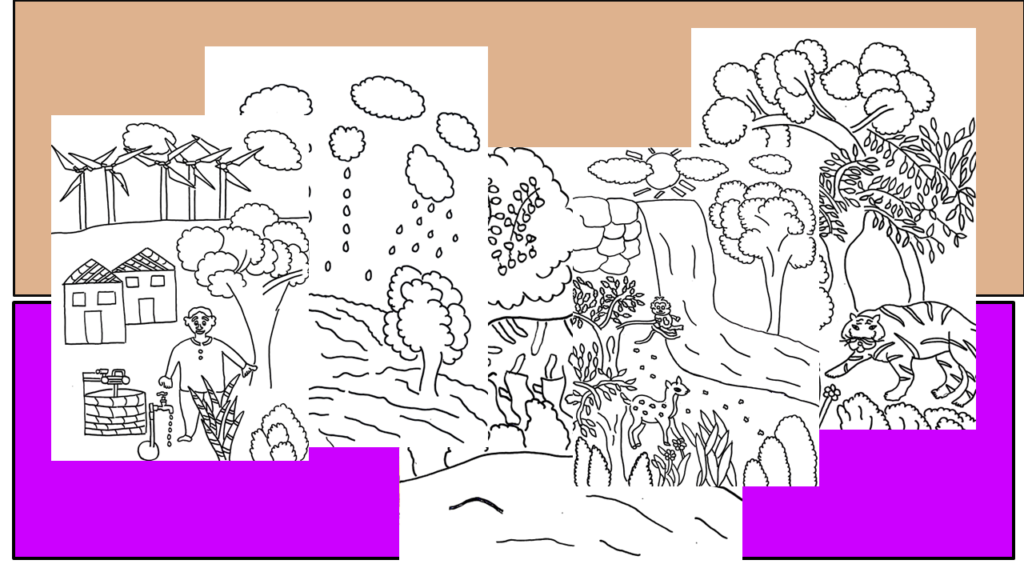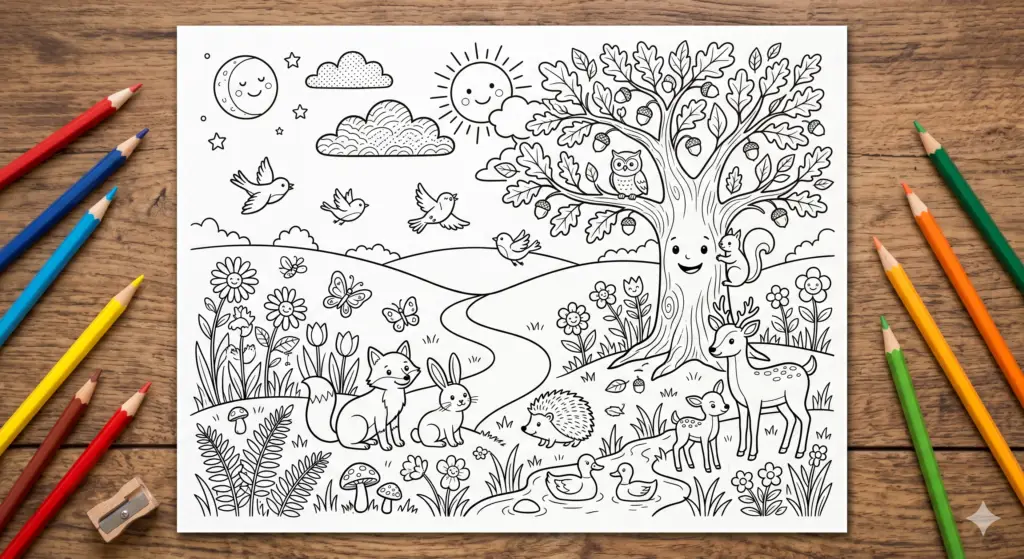
Childrens colouring pages are a fun and creative way to engage young minds while developing essential motor skills. These pages often feature animals, cartoons, nature scenes, and more—sparking imagination and encouraging artistic expression. These pages are combined with some interesting facts about objects on the page. Whether used at home, in classrooms, or on the go, childrens colouring pages offer both entertainment and educational value. In fact, coloring can improve focus and hand-eye coordination, and an interesting fact is that studies show 88% of children are more likely to remember details when they interact with visuals like coloring pages. With a wide range of themes available, children can explore new ideas and subjects through art. From dinosaurs to outer space, there’s a coloring page for every curious child. Parents and teachers alike turn to childrens colouring pages as a simple yet powerful learning tool. These pages make it easy to combine fun with learning, turning quiet time into a meaningful and colorful experience.
The Developmental Power of Coloring
Below are the primary reasons why children's coloring pages are a necessity in early development:
1. Cognitive and Academic Foundation
Coloring pages act as an introductory bridge to formal education by helping children categorize and understand the world around them.
- Species and Environmental Awareness: Through themes like sea animals or nature, children learn to identify different species and their natural habitats, such as coral reefs or polar waters.
- Biological Classification: Engaging with diverse illustrations helps children differentiate between mammals, birds, and reptiles, introducing them to basic biological concepts.
- Color Theory and Critical Thinking: Deciding which colors to use for specific objects requires observation of the real world and critical thinking.
- Sustained Focus: Completing an intricate scene requires a child to practice patience and build an attention span, which are vital skills for classroom learning.
2. Physical Development and Motor Skills
The act of coloring is a "powerhouse" for developing the physical dexterity required for daily life tasks.
- Fine Motor Coordination: Holding and manipulating coloring tools strengthens the small muscles in the hands, fingers, and wrists.
- Pre-Writing Skills: The "grip strength" developed during coloring is a fundamental precursor to proper handwriting and pencil control.
- Hand-Eye Coordination: Learning to stay "inside the lines" of complex designs improves precision and visual-spatial awareness.
3. Emotional Health and Mindfulness
Coloring provides a unique therapeutic outlet that supports a child's mental well-being.
- Stress Reduction: The repetitive motion of coloring creates a meditative state that lowers activity in the amygdala, the brain's fear center, effectively reducing anxiety.
- Emotional Expression: Coloring offers a safe, non-verbal way for children to express their internal moods and feelings through their choice of colors and stroke intensity.
- Confidence Building: Completing a coloring page provides a tangible sense of accomplishment, which significantly boosts a child's self-esteem and pride in their work.
4. Whole-Brain Engagement
Coloring is one of the few activities that requires the logical and creative hemispheres of the brain to work in tandem.
- Logical Activation: The left hemisphere is engaged when a child follows lines, chooses specific areas to color, and uses analytical thinking to finish a pattern.
- Creative Activation: The right hemisphere is stimulated through the experimentation with color blends, shading, and artistic intuition.
- Neural Connectivity: This dual activation can strengthen the link between cerebral hemispheres, aiding in memory retention and long-term problem-solving skills.
Information about bus
1. Do you know the word bus is obtained from a Latin word?
“Omni bus” is a Latin word. In latin, it means “for all” or “for everyone.” Buses are huge-sized vehicles. They can accommodate many people.
2. Who was the frontiersman of the steam engine buses in England?
In 1830, Sir Goldsworthy gurney, along with Walter Hancock in England, built a bus driven by a steam engine. It might have been the earliest bus run on an engine. It was developed as an alternative to horse-run carriages.
3. Did you know that school buses are yellow colored in most countries?
Yellow-colored buses are part of school children’s transport in most regions of the world. This color shows prominent visibility, in normal, as well as in dusky light. The yellow color is helpful for safety while traveling in traffic. Yellow-colored school buses are commonly used in most parts of the world. The highly visible yellow-colored buses are useful in reducing the chances of accidents. In European countries, regional transport groups control the operation of school buses. These look like other public transport buses.
4. What are the distinguishing features of school buses?
There are some distinguishing features of the school bus that separate it from other types of buses.
On school buses, there is a stop-arm safety system. It is used for picking up and dropping off school children. The stop-arm extends from the side of the bus, creating a physical barrier that prevents vehicles from passing while children are crossing. One of the distinguishing features is compartmentalization, which avoids collision.
In accidents, fast evacuation of vehicles, is necessary. So, for this, school buses are supplied with multiple emergency exits. To discover the location of school buses, these buses are provided with a GPS tracking system. To combat fire, these buses are provided with fire extinguishers and first-aid boxes. These buses have been provided with a lower speed limit compared to other vehicles to avoid accidents.
5. Did you know that the kinder garden school buses in Japan come with different-shaped designs?
In Japan, there are differently shaped kindergarten kids’ buses . These are designed such that buses look like cartoon characters. Some examples are Pikachu, Hello Kitty, and Thomas the tank engine.
References
https://kids.britannica.com/scholars/article/bus/110736
https://en.wikipedia.org/wiki/Bus
https://en.wikipedia.org/wiki/School_bus
https://www.britannica.com/biography/Goldsworthy-Gurney
https://en.wikipedia.org/wiki/Goldsworthy_Gurney
https://www.britannica.com/summary/steam-engine
. To Download PDF click here – Information about bus
Childrens Colouring pages – Bus travelling along countryside
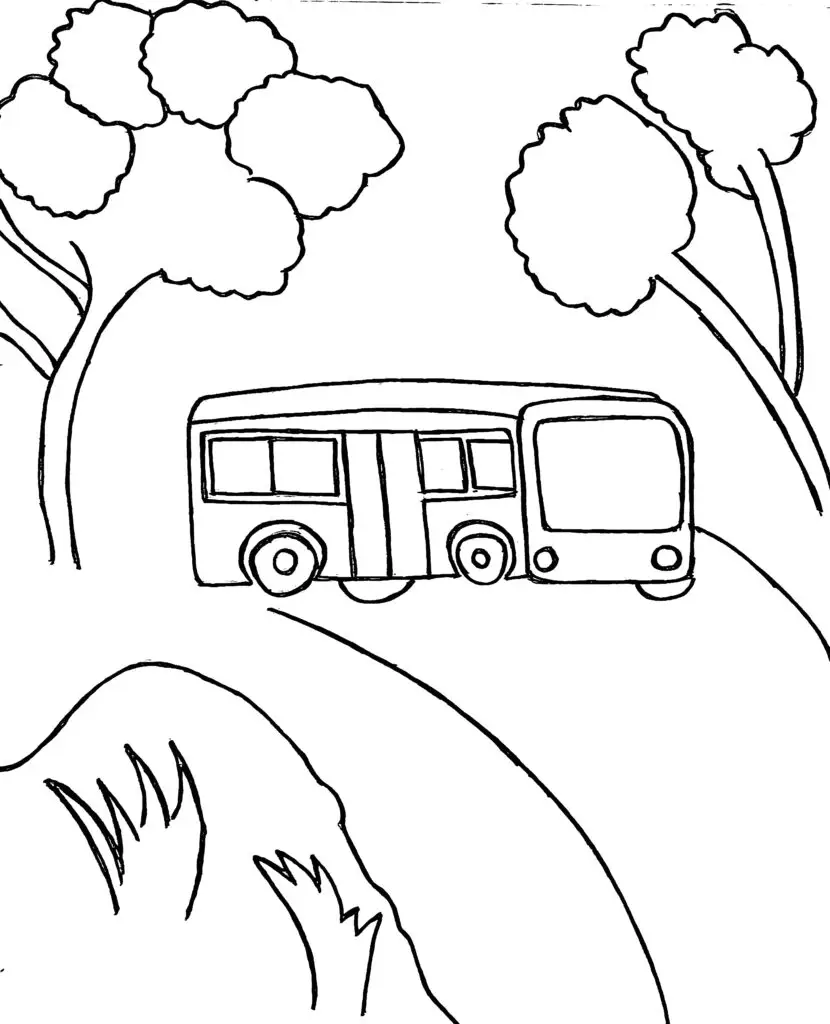
This delightful illustration is perfect for childrens colouring page, showcasing a school bus traveling along a quiet countryside road. On the side of the road, tall trees are there, their leaves swaying gently in the breeze. The fresh green grass stretches along the roadside in a soft, curving line, adding to the calm and peaceful atmosphere. The school bus is brightly drawn, with clear outlines for the windows and doors, making it ideal for young artists to fill in with vibrant colors. The surrounding trees and grass are also marked clearly for coloring, bringing the scene to life with creative potential.
The trees vary in shape, adding interest and variety, while the grass appears soft and inviting. This is simple yet charming scene provides a wonderful opportunity for creativity, making it a standout among childrens colouring pages.
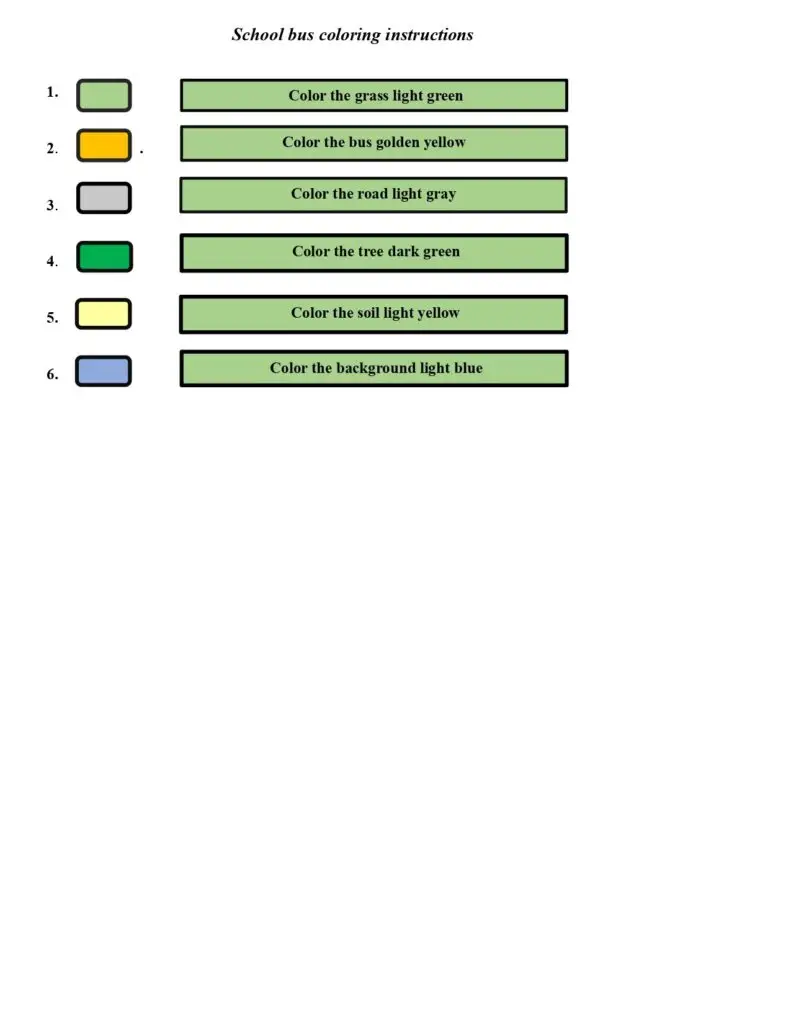
Coloring instructions for school bus
facts about boat
Which is the oldest unearthed boat?
The earliest boat, named Pesse canoe, was a prehistoric boat. For the fabrication of the boat at that time, a hollow pine tree trunk was utilized. It is a boat from the Mesolithic period, between 8200 and 7600 BC. It is about a 10000-year-old boat. Fossils of a Pesse canoe boat were found at the time of the trenching of roads in the Netherlands. Actually, in 1955, the road was trenched for the construction of a highway. Pesse canoe is retained at the Drents Museum in Assen, Netherlands.
2. When was sailing introduced at the Olympic Games for the first time?
Sailing was first contested in the 1900 Paris Olympic Games. From its inclusion in the Olympic Games, sailing has been a vital part except only in 1904, when it was excluded from the St Louis Olympic games. It is an open event where men and women compete together.
3. Do you know the name of the country that won the highest number of gold medals in sailing?
The highest gold medals in sailing are won by Great Britain. Great Britain is indeed the most successful country in sailing at the Olympics, with 66 medals.(till 2024).
4. How to distinguish a boat from a ship?
When compared to boats, ships are bigger. Ships are fabricated for long distances while traveling along the ocean. As compared to ships, boats are relatively small. Boats are utilized when there is short distance travel or in coastal regions.
References
https://en.wikipedia.org/wiki/Pesse_canoe
https://en.wikipedia.org/wiki/Sailing_at_the_Summer_Olympics
https://www.britannica.com/browse/Prehistoric-Age
To download PDF click here –facts about boat
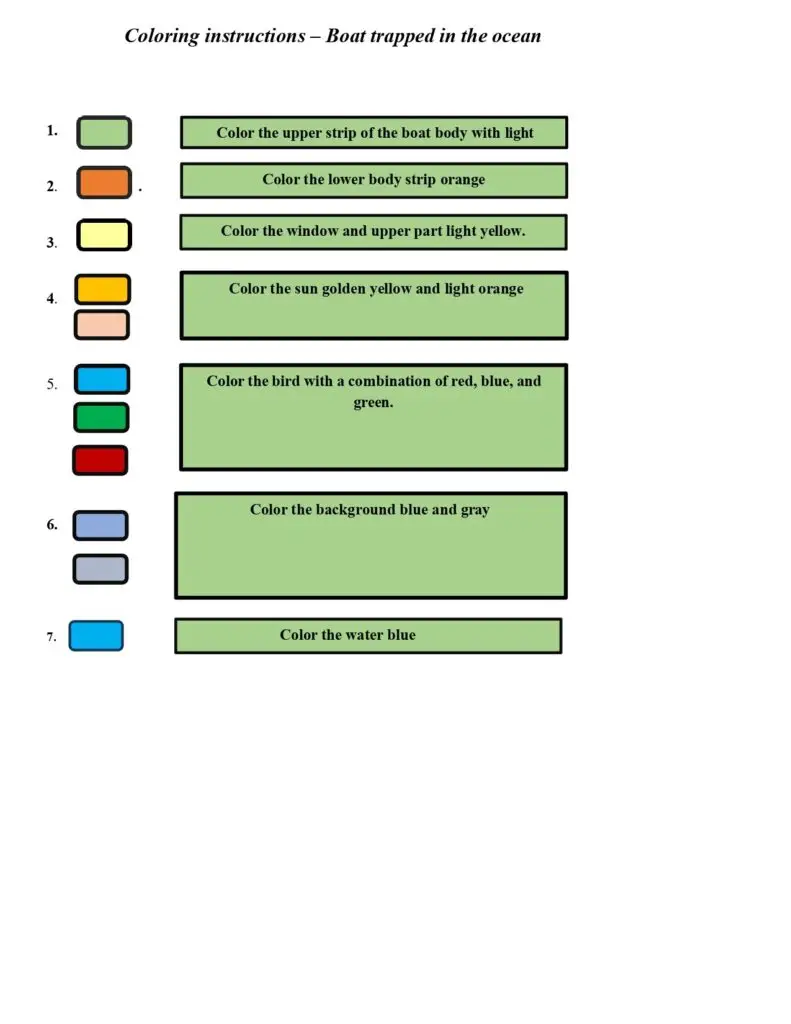
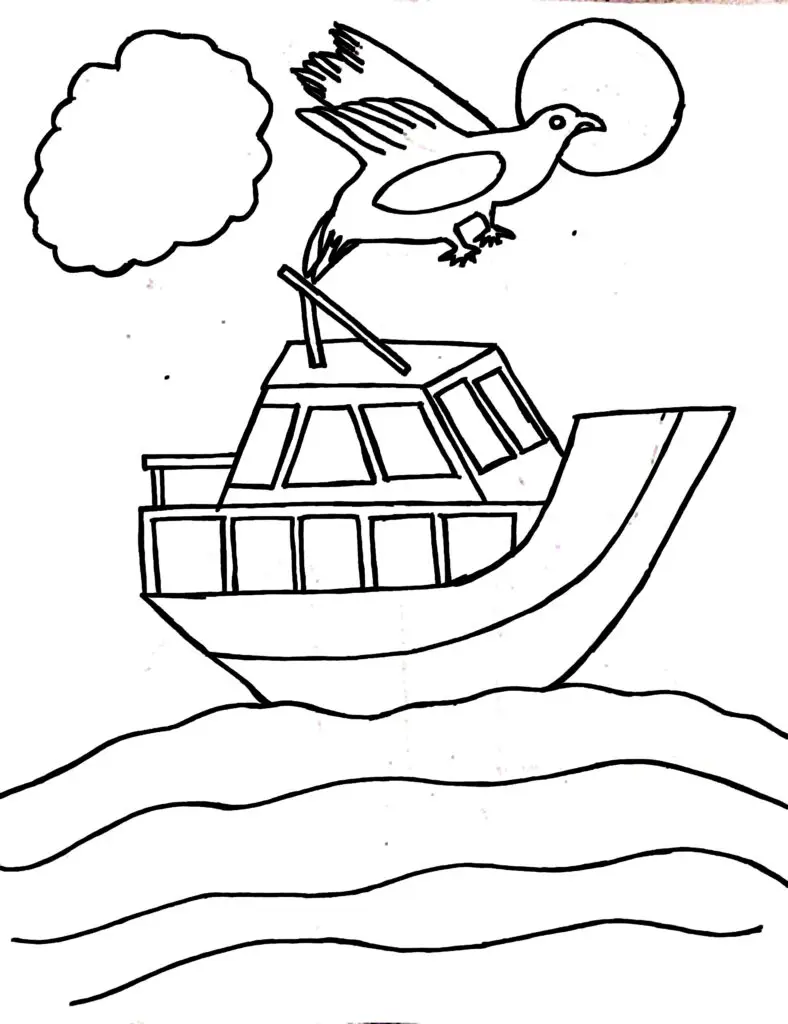
Coloring instructions - Boat trapped in the ocean
Childrens colouring pages -Boat in the ocean
This page shows a dramatic scene of a boat trapped in the ocean. Surrounded by rough, high waves, the boat appears to be struggling to move forward. Above the boat, a bird soars freely through the clear sky. The sun shines brightly behind the bird, casting a warm glow over the scene.
The contrast between the wild ocean and the calm sky creates a beautiful and dynamic image. The boat is drawn with detailed features that make it look realistic, while the bird’s wings are spread wide as it glides smoothly through the air.This is one of those engaging childrens colouring pages that invites creativity and imagination. Bright colors can be used to bring the powerful ocean, the vibrant sky, and the detailed boat to life. Perfect for sparking creativity, this page offers a fun and relaxing activity for kids who enjoy both nature and adventure scenes.
Information about balloons
1. Do you know the name of the person who created the first rubber balloon?
A British scientist named Michael Faraday is credited with the first rubber balloon creation, in 1824. He pressed two rubber sheets for this purpose. It was used by Prof Faraday for research studies. It was filled with gas, likely hydrogen. It was developed for scientific experimentation at the Royal Institution in London.
2. Do you know what is used for filling balloons?
Generally, we can utilize air, helium, or hydrogen gas to fill balloons. When compared with hydrogen, helium is chosen. Hydrogen and Helium gases are light weight compared to air. A major difference is that helium gas is non-flammable, whereas hydrogen gas is flammable.
3. Which material was used in ancient times for balloon creation?
In ancient times, balloons were created using pig bladders or animal guts. They were dried and twisted. The next step was the filling of a balloon. The balloons were filled by blowing air into them.
4. For what purpose were balloons used in ancient times?
In ancient times, balloons were used as toys or for experimental purposes. In some ancient cultures, it is part of a traditional celebration. The Aztecs might have been among the first to create balloon-like shapes from animal bladders for decorative or artistic purposes.
5. Have you heard about the Fanush festival?
In North Calcutta, there is a custom of hovering hot air balloons that are constructed from paper.These balloons are called “Fanush”. The hot air balloons are Floated on the occasion of kali puja. The Fanush fest and Diwali, are celebrated on the same day. The tradition started around 1910.
References
https://en.wikipedia.org/wiki/Michael_Faraday
https://www.britannica.com/facts/Michael-Faraday
https://en.wikipedia.org/wiki/Balloon
https://en.wikipedia.org/wiki/Hydrogen
https://en.wikipedia.org/wiki/Helium
https://en.wikipedia.org/wiki/Sky_lantern
To download PDF click here –Information about balloons
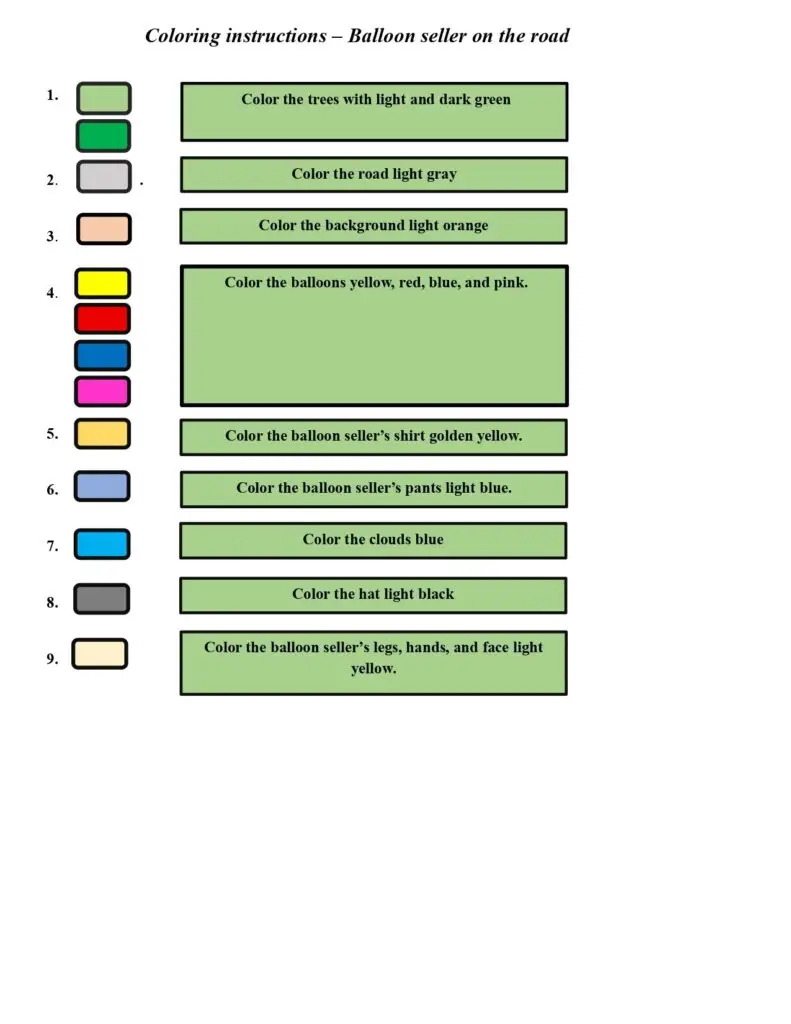
Coloring instructions- balloon seller on the road
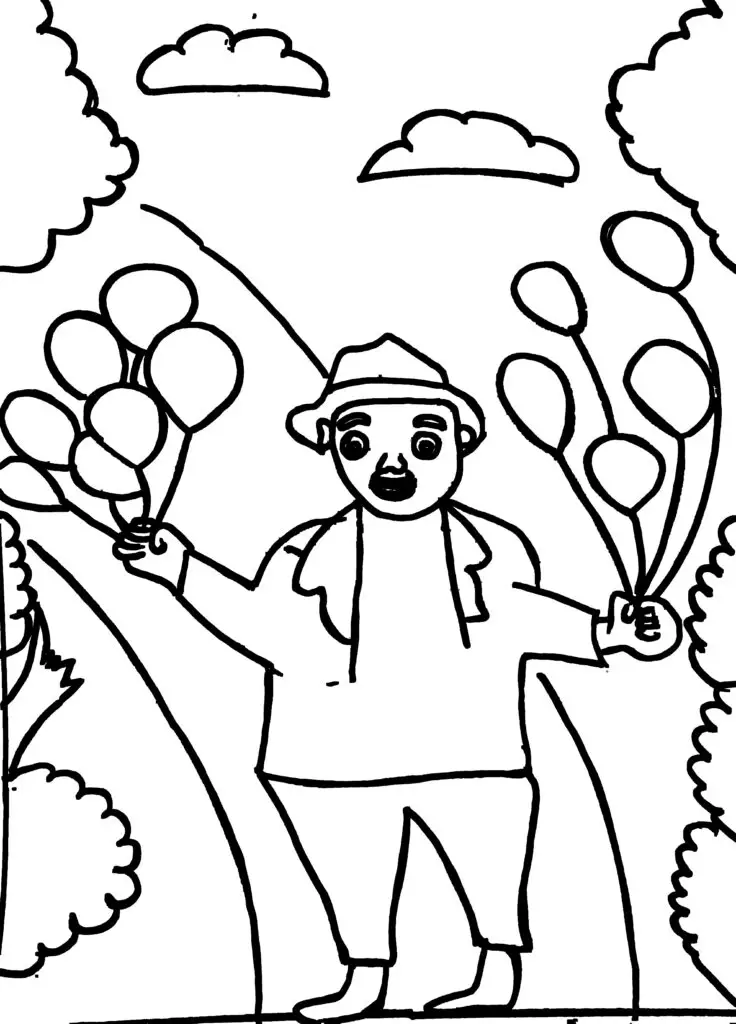
Childrens Colouring pages – balloon seller on road
This page shows a cheerful balloon seller walking slowly along a quiet road. He carries many colorful balloons, all round in shape and tied with strings that flutter slightly in the breeze. Tall trees line the road, their leaves gently swaying in the wind, while soft clouds float across the blue sky.
The balloon seller wears a hat and smiles warmly, adding to the calm and happy feeling of the scene. This children colouring page offers a wonderful opportunity for kids to use bright and fun colors to bring the balloons, trees, and sky to life.The page is simple, enjoyable, and perfect for young artists. As a relaxing and creative childrens colouring pages, it is loved by many children for its joyful and peaceful atmosphere. It encourages creativity while keeping the coloring experience fun and easy.
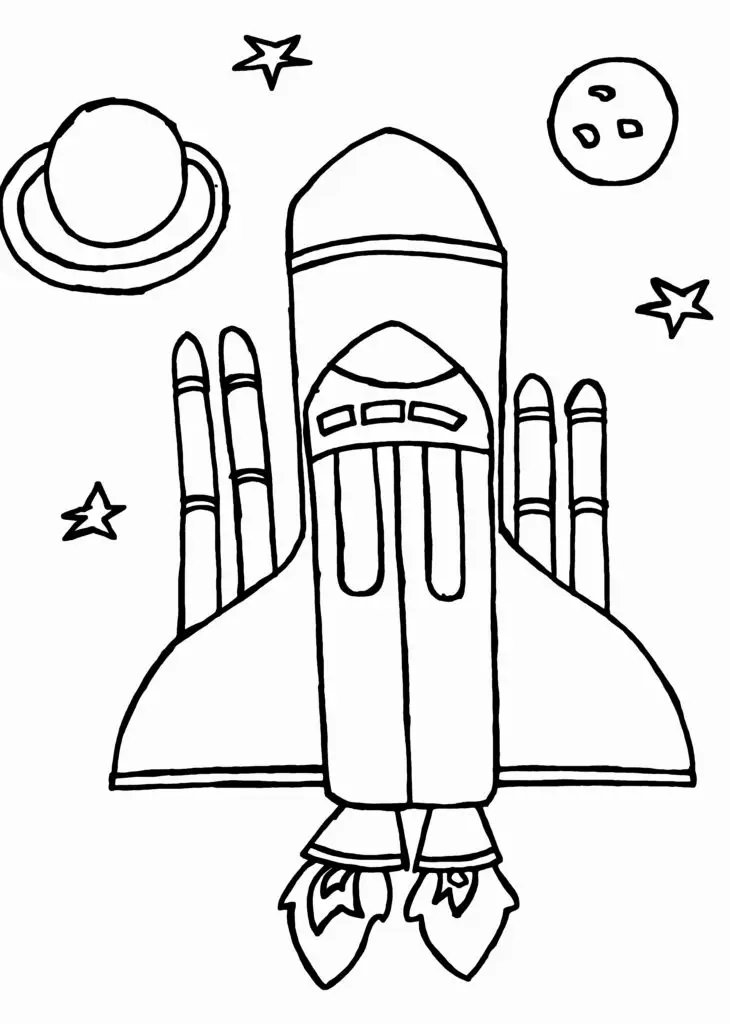
Satellites, Mars facts, Saturn facts
1. How do I define a satellite?
They are an entity that revolves around any of the natural entities in space, such as a star, planet, moon, asteroid or comet. Satellites are either natural satellites or artificial satellites. Natural satellites are entities, naturally present in space, that revolve around a planet. The moon (natural satellite) revolves around the earth. Artificial satellites are fabricated by humans and launched into space to revolve around natural entities (celestial bodies) like planets, stars or moons.
. The rocket is mainly used for launching satellites into space. The first satellite in space was sent by the Soviet Union, named Sputnik 1,in October 1957.A dog named Laika was the first living thing to go into space in the Sputnik 2 satellite.
2. Is Saturn surrounded by rings?
It is a complex and distinguishable ring system. It is mainly composed of ice and rock particles. These particles exist in different sizes. They may be like small dust flecks or gigantic chunks. Ice comprises the major portion of the rings, while rock material comprises a minor portion.
3. Saturn’s name is derived from whose name?
Saturn gets its name from the Roman god of farming and riches. Saturn cannot support life. Its atmosphere is too harsh and dangerous for living things. Saturn is about 9 times wider than Earth. It is 120500 km wider than Earth.
4. Do you know the planet, which is also called the Red Planet?
Soil present on Mars has iron oxide in it, due to which it appears red. Hence, it is also known as the Red Planet.
5. Do you know the names of the moons of Mars?
Mars has two tiny moons—Phobos and Deimos. They are shaped like potatoes. The moons are named after the sons of the Greek war god Ares.
References
https://spaceplace.nasa.gov/satellite/en/
https://www.britannica.com/science/satellite
https://en.wikipedia.org/wiki/Saturn
https://science.nasa.gov/saturn/
https://www.britannica.com/place/Saturn-planet
https://www.britannica.com/topic/Saturn-god
https://en.wikipedia.org/wiki/Saturn_(mythology)
https://science.nasa.gov/mars/facts/
https://www.britannica.com/place/Mars-planet
https://en.wikipedia.org/wiki/Mars
To download PDF click here – Satellites, mars facts, saturn facts
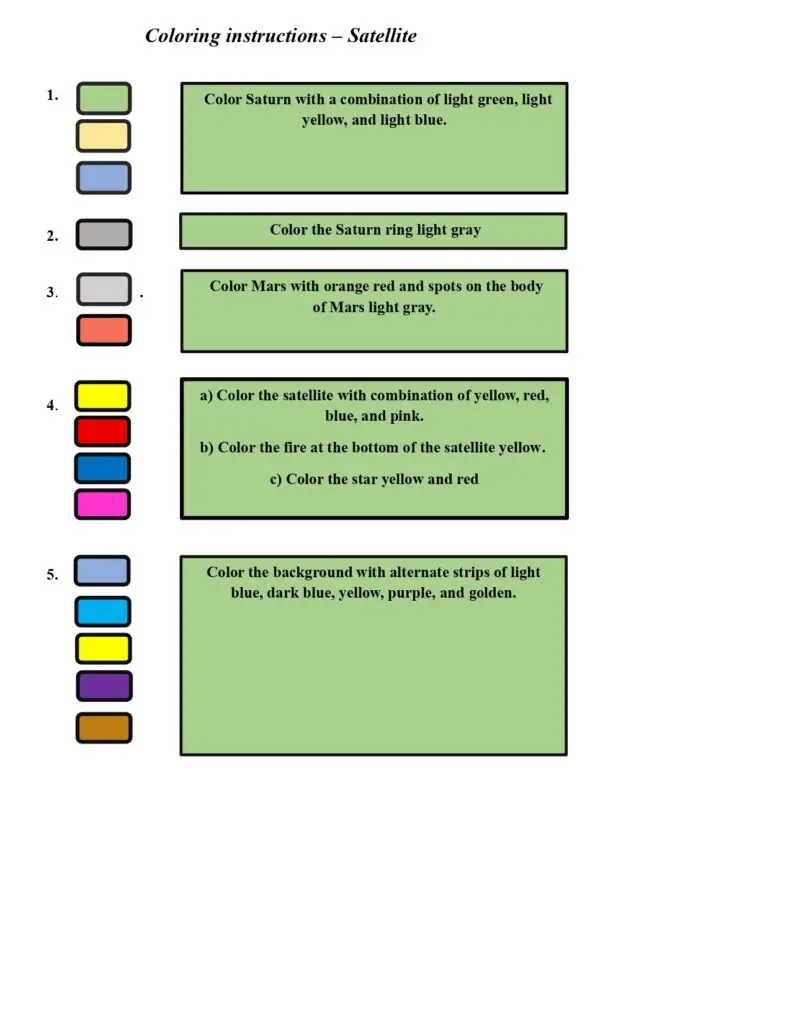
Coloring instructions-satellite
Childrens colouring pages – satellite ,Mars And Saturn
This childrens colouring page features a satellite positioned next to Mars, Saturn, and a backdrop of stars. The satellite is outlined clearly, making it easy for kids to color in different shades like silver or gray. Mars is depicted with its famous red surface, perfect for filling in with rich red and orange hues. Saturn’s large, golden rings offer soft yellows and light browns to explore. Scattered around the planets, bright stars add sparkle and invite creativity with colors like white, yellow, or even glittery tones. This childrens colouring page encourages imagination, offering plenty of space for creative choices.
The sleek, modern satellite contrasts beautifully with the bold colors of Mars and the gentle tones of Saturn’s rings, while the starry background completes the cosmic scene in a fun and educational way.Overall, this page provides a fun, colorful adventure through space
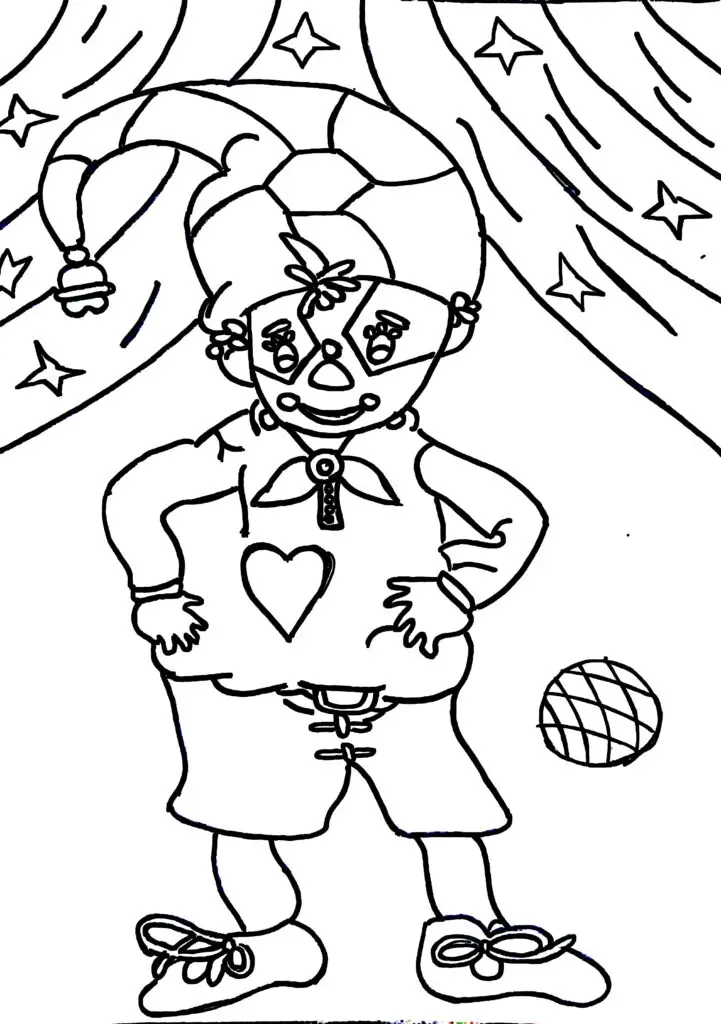
Clown facts
1. Do you know about Penny Wise Clown?
Although clowns in circuses, festivals and other occasions appearing as comic characters, there are some clown characters as scary characters in novels and movies. Stephan King‘s novel called “IT”was a horror novel in which a penny-wise character is scary. Penny-wise was the clown in that novel.
2. Do you know who was the first clown to perform in a circus in the U.S.?
Mathew Sully was the first clown to act in a circus in the United States. He performed in Ricketts Circus. He was a harlequin, a tumbler, and a singer.
3. Who was the first clown born in America?
The first American-born clown was John Durang. He has also performed in Ricketts’s circus.
4. Who performed the first circus in America?
On April 3, 1793, John Bill Ricketts performed the first circus in Philadelphia, America, where the president of America at that time, George Washington, was present for the show.
5. Do you know about the only circus school in Australia?
The Flying Fruit Fly Circus School is Australia’s only primary and secondary-level circus school.It is the academic division of the flying fruit fly circus.
6. Do you know the name of the person who has started a modern-day circus?
Philip Astley was the person who started the modern-day circus in 1770. It had horse acts, clowns, and strong performers.
7. Do you know the name of the actor who started his career as an acrobat and juggler?
Burt Lancaster, a famous actor, began his career as an acrobat and juggler.
References
https://www.britannica.com/topic/It-by-King
https://en.wikipedia.org/wiki/It_(novel)
https://stephenking.fandom.com/wiki/It_(Creature)
https://en.wikipedia.org/wiki/Circus_clown
https://www.britannica.com/biography/Burt-Lancaster
https://en.wikipedia.org/wiki/Flying_Fruit_Fly_Circus_School
https://en.wikipedia.org/wiki/The_Flying_Fruit_Fly_Circus
To download PDF click here – Clown factsClown facts
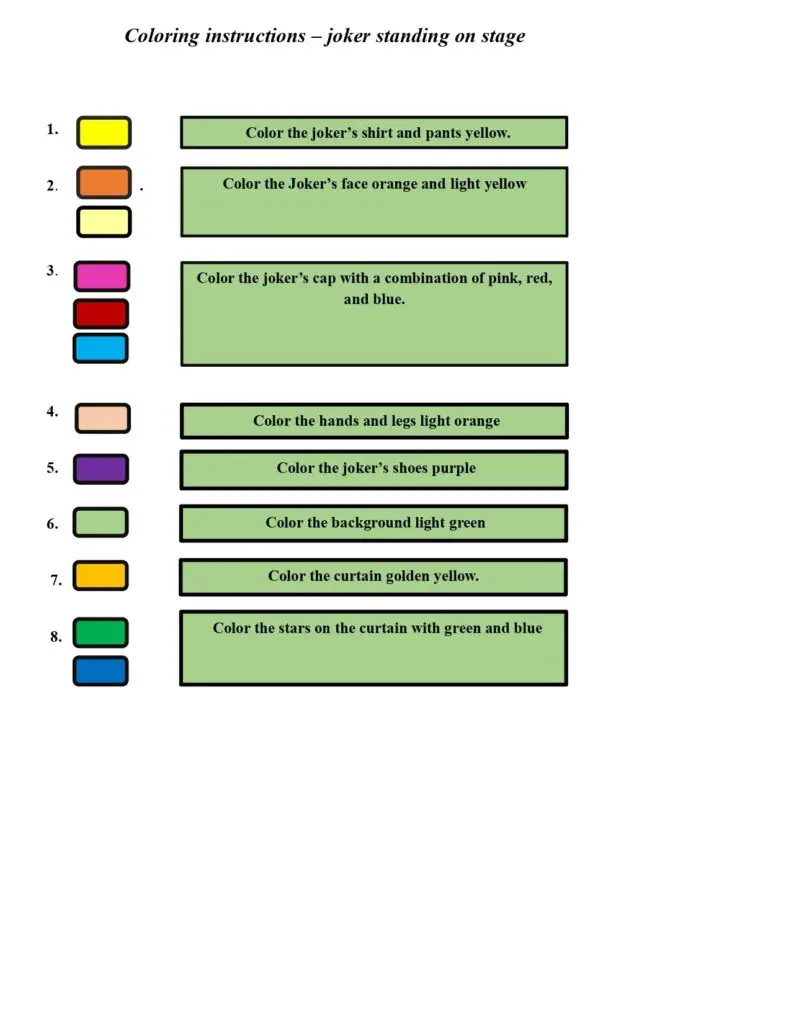
coloring instructions - joker standing on stage
Childrens colouring pages- joker standing on stage
This childrens colouring page shows the Joker standing proudly on a lively circus stage. He wears bright, cheerful clothes, a big red nose, and a colorful hat on his head. His wide, playful smile adds to the fun atmosphere. A ball rests beside him, ready to be part of his act. The excited crowd waits eagerly for the tricks he’s about to perform. The stage shines under many lights, and his large, silly shoes add to the humor. Earlier, the ball was rolled into place, setting the scene for fun. This circus coloring page invites kids to bring the picture to life with joyful colors and boundless imagination.
Types of Animation
1. Do you know that the word animation is obtained from Latin words?
In the Latin language, the meaning of animatio is “to bring life”. Hence, animation means giving life to still images.
2.What is the definition of an animation?
“Animation” is an artistry in which a person converts still images, drawn by hand, or on a computer, with the help of software, into a moving object. There are different methods of animation. These are:
a. Traditional Animation method: In the traditional method of animation, sketches are created by hand, on a separate celluloid sheet. These sketches are converted into moving objects.
b. 2 D Animation – In this method, a person creates illustrations using computer software, in 2-dimensional space.
c. 3 D Animation – In this method, a person utilizes computer software for the creation of three-dimensional objects.
d. Stop-Motion Animation: – Here, one can physically relocate objects, frame by frame, to create apparent movement.
e. Motion Graphics: – This method is applied in advertisements and presentations. Here, one can use moving text and graphics for graphic communication.
3. Who is the father of animation?
A French parodist named Émile Cohl is considered the father of animation. In 1908, for the first time, the traditional animation method was applied in the short film called Fantasmagorie, by Emile Cohl. Cohl’s work established many foundational techniques and principles of animation.
References –
https://en.wikipedia.org/wiki/Animation
https://kids.britannica.com/scholars/article/animation/7644
https://www.britannica.com/art/animation
https://en.wikipedia.org/wiki/%C3%89mile_Cohl
To download PDF click here – Types of animation
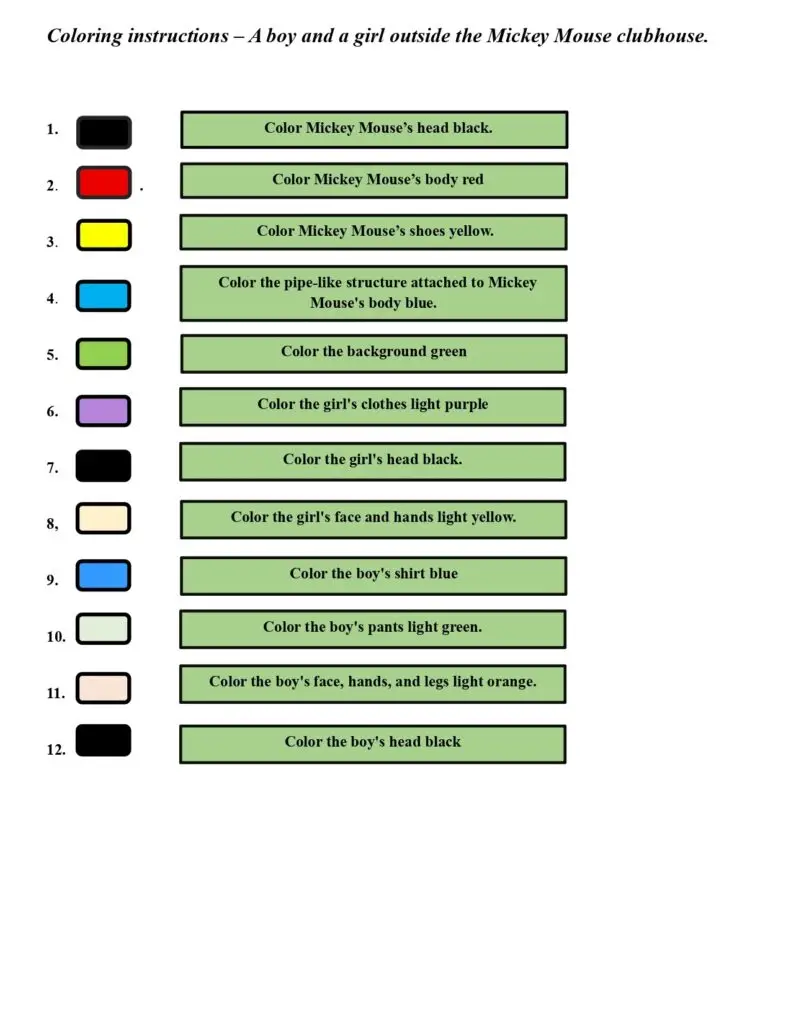
Coloring instructions- A boy and a girl outside the mickey mouse clubhouse
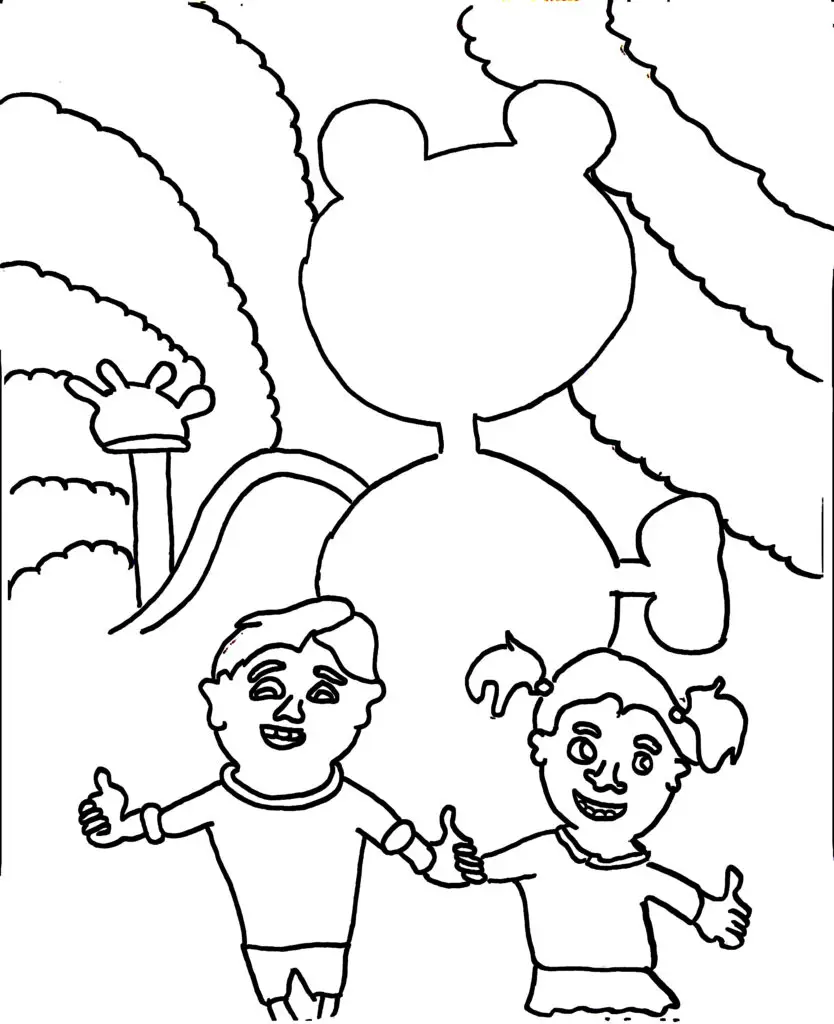
Childrens Colouring pages – two kids outside mickey mouse club house
This delightful childrens colouring page features a magical moment as two kids—a cheerful boy and a smiling girl—stand outside the famous Mickey Mouse Clubhouse. The scene captures the excitement and wonder of their visit, with the iconic clubhouse standing proudly in the background. The clubhouse is surrounded by lush greenery, with soft grass, bushes, and trees creating a bright and welcoming environment.
The boy and girl are drawn with joyful expressions, clearly thrilled to be at this special place.. The whole scene is outlined clearly, making it perfect for colouring, whether using crayons, markers, or coloured pencils. This colouring page not only sparks creativity but also invites children to imagine their own fun adventures with Mickey and friends. With its mix of nature and beloved characters, it’s a standout choice among childrens colouring pages, offering hours of artistic enjoyment and storytelling inspiration.
First Helicopter
1. How can one define a helicopter?
A machine that can rise into the air, land perpendicular, revolve in any direction, or remain static in the air with the help of a rotor or propeller, is known as a helicopter. The revolving blades on the top of the helicopter are called rotors. Rotors are driven by a motor.
2. Do you know the name of the person who is recognized for his work on fixed-wing aircraft?
Sir George Cayley is a person who is admired for his contribution to fixed-wing aircraft. He is regarded as the father of aeronautics. He became the first person to identify and articulate the four fundamental forces of flight, i.e. lift, thrust, drag, and weight. He created and experimented with models and even a full-scale glider. He did enormous work in aerodynamics and wing structure. In 1843, he designed and built a successful, piloted glider, which is considered one of his most notable achievements.
3. Who is the pioneer of aviation and do you know his role in the Gyroplane No.1 development?
Charles Richet, a physiologist and aviation pioneer, provided technical, financial, and moral support to the Breguet brothers in their development of the Gyroplane. Louis and Jacques Breguet designed and built the Gyroplane, including its four-bladed rotor system. The Breguet-Richet had demonstrated vertical takeoff, landing, and lifting a pilot (Volumand) a short distance off the ground, Gyroplane No. 1, on the 29th of September 1907. The flight was brief, and the aircraft was unstable, making it difficult to control.
4. Who was the first woman to drive a helicopter?
Hanna Reitsch was the first woman to drive a copter. In 1938, a Focke-Achgelis Fa 6 flight was driven by Hanna Reitsch at DeutschlandHalle, in Berlin.
References
https://kids.britannica.com/scholars/article/helicopter/110742
https://en.wikipedia.org/wiki/Helicopter
https://www1.grc.nasa.gov/beginners-guide-to-aeronautics/gliders/
https://kids.britannica.com/scholars/article/glider/37036
https://en.wikipedia.org/wiki/George_Cayley
https://www.historic-uk.com/HistoryUK/HistoryofBritain/Sir-George-Cayley/
https://en.wikipedia.org/wiki/Breguet-Richet_Gyroplane
To download PDF click here – First Helicopter
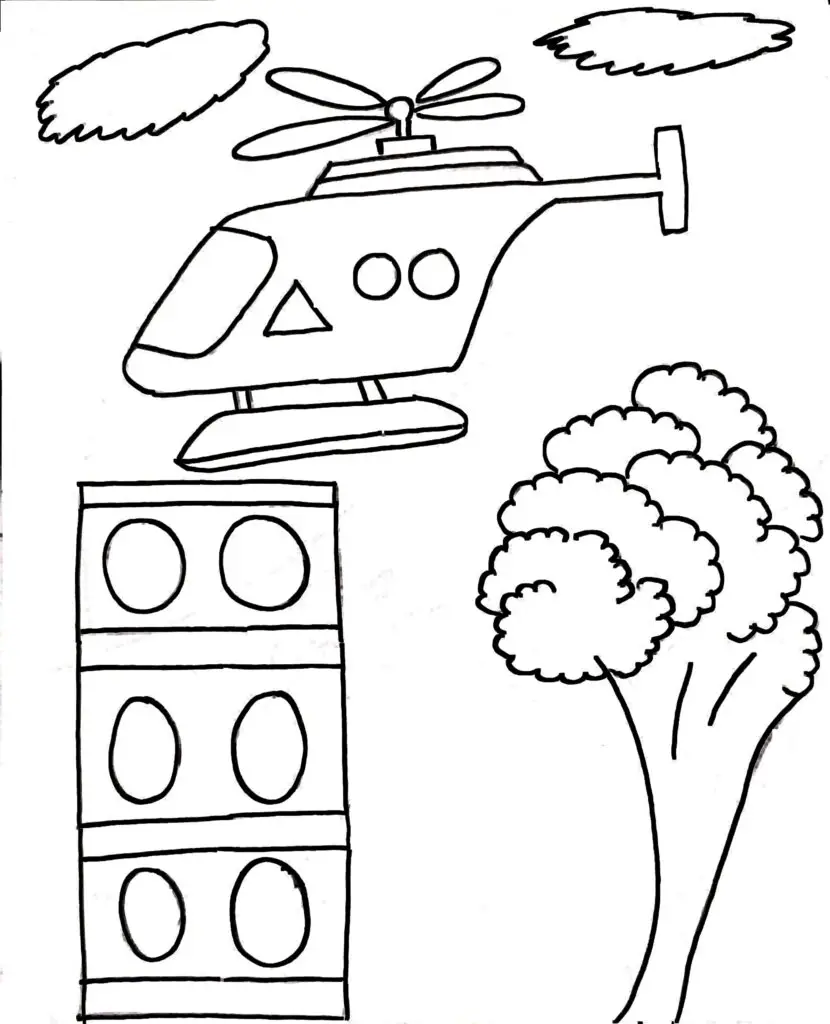
Childrens Colouring Page – Helicopter above residential area with building and tree
Let your child’s imagination soar with this exciting children’s colouring page featuring a helicopter flying high above a peaceful residential area. This engaging scene includes a tall building, a leafy tree, and a helicopter hovering above—perfect for inspiring creativity and motor skills. The clear outlines make it easy for young artists to color, whether using crayons, colored pencils, or markers. Ideal for both home and classroom use, this kids colouring page brings together fun and learning in one printable activity. Whether your child loves vehicles, flying machines, or cityscapes, this helicopter colouring page is sure to become a favorite.
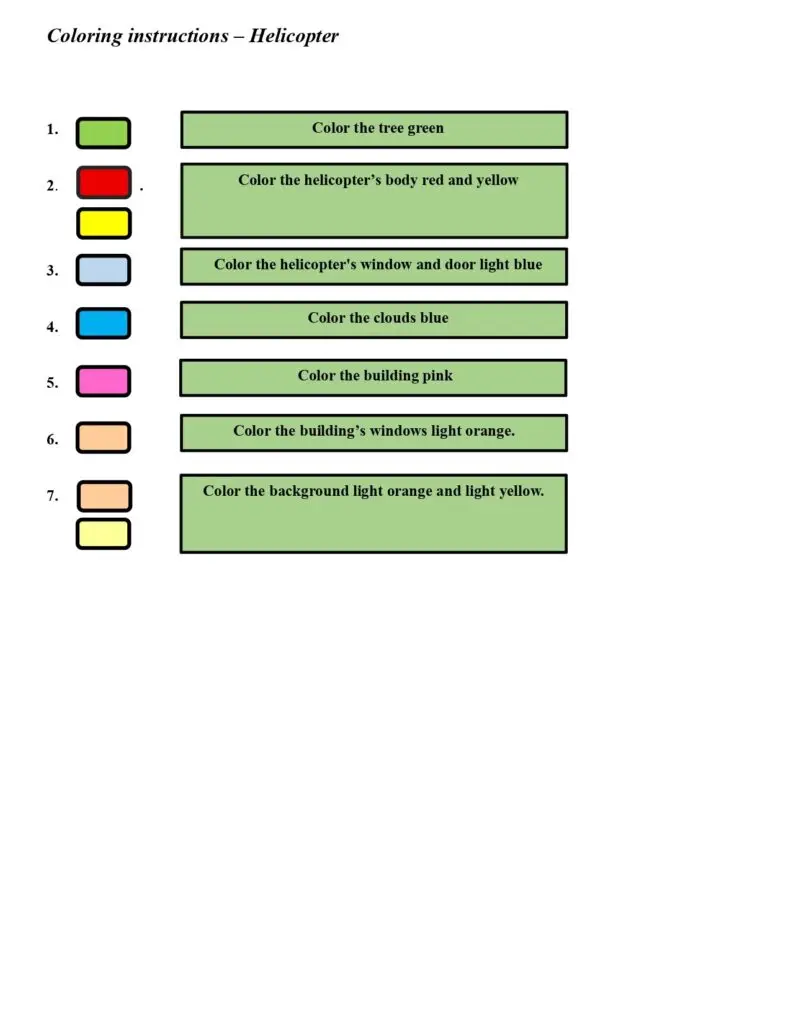
Coloring instructions -helicopter
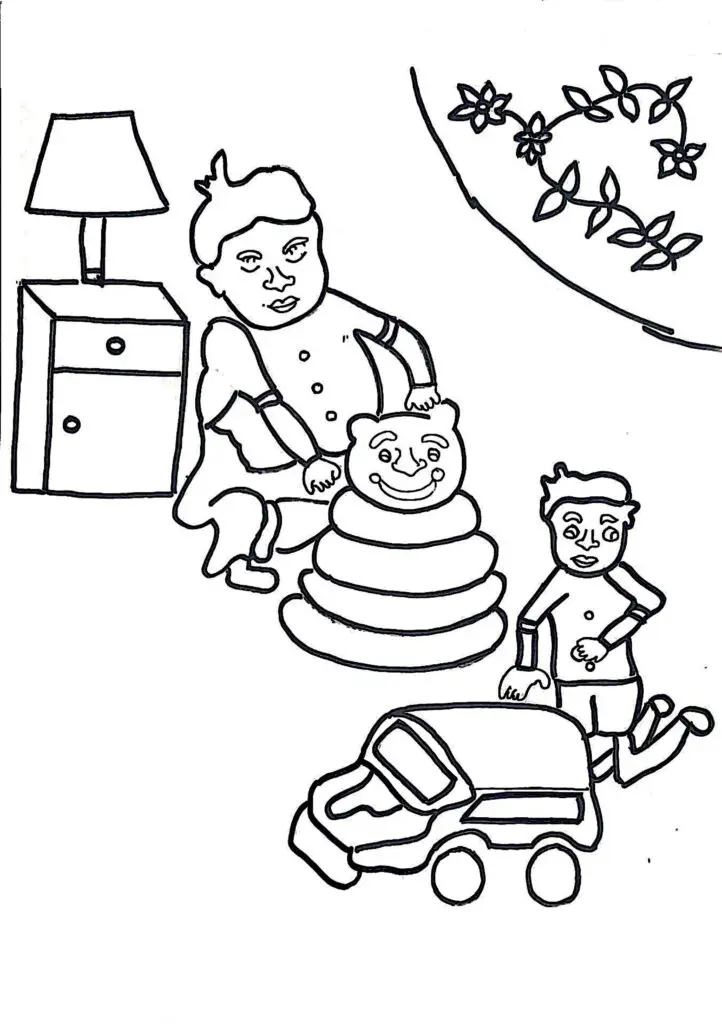
Toys
1. Do you know what materials were used to construct toys in the ancient world?
In ancient times, sticks, rocks, and wood were utilized to craft toys. Archaeological evidence suggests that in ancient times, toys such as dolls and animals were created using natural materials. In Ancient Egypt, there were toy dolls made of wood, sticks and clay.
2. Do you know the names of toys that are popular among everyone?
Barbie, Rubik’s Cube, Lego and Hot Wheels are the names of toys that are popular among children.A fashionable doll, widely known as Barbie, was first introduced in 1959. Ruth Handler is credited with the invention of the Barbie doll. In 1950, Lego created building brick toys. Bricks are made of plastic. Plastic bricks interlock with each other. Erno Rubik invented the Rubik’s Cube puzzle toy in 1974. There are 26 small cubes in it. The cubes are of six colors. The Hot Wheel is a toy car. It was introduced in 1968. It was invented by Eliot Handler.
3. Do you know where the largest toy museum is situated?
The BECK Museums of Branson in Branson, Missouri, USA, is the largest museum of toys. The toy museum is about 30000 square feet. There are about one million toys in the toy museum. It includes vintage toys and modern toys.
References
https://www.britannica.com/topic/Barbie
https://simple.wikipedia.org/wiki/Ruth_Handler
https://www.britannica.com/biography/Erno-Rubik
https://www.imdb.com/name/nm10832896/
To download PDF click here – Toys
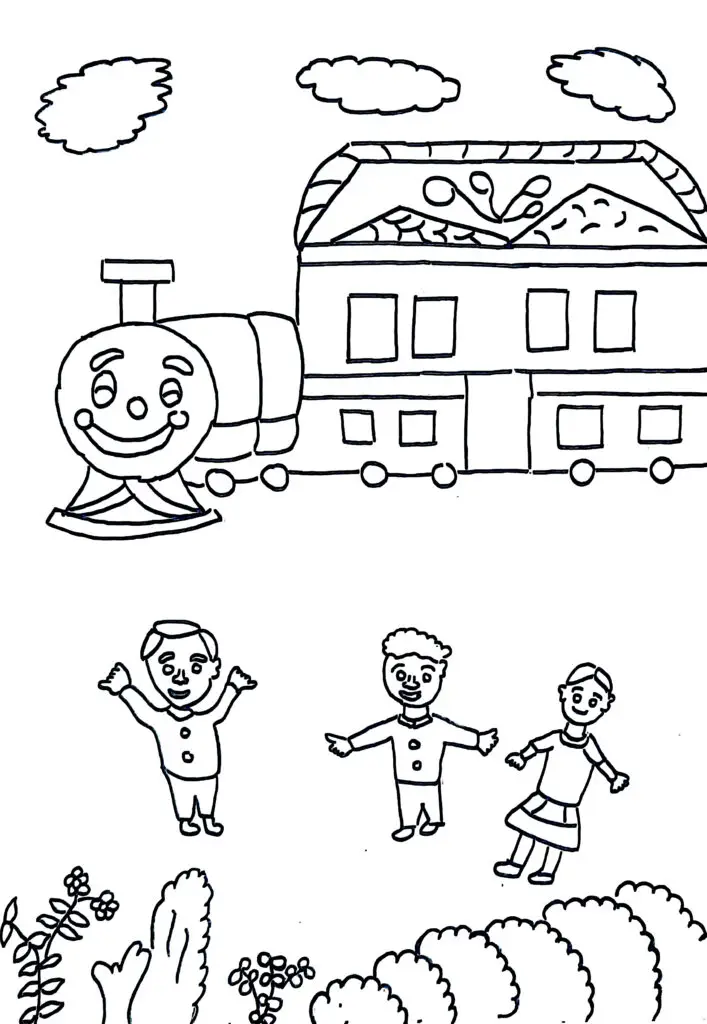
Origins of Kindergarten
When and where did the first kindergarten school start?
The first kindergarten school was started in Germany in the 19th century. The motive behind starting kindergarten was to prepare children for formal school education through playing, singing, and activities. These playhouse schools are for children between 2 and 6 years of age.
2. Who was credited with the discovery of the word “kindergarten”?
It was Friedrich Fröbel who coined the word “kindergarten,” which means children’s garden. Friedrich Fröbel, a German educator, started the first kindergarten school in Germany. The idea was to develop skills in children between 2 and 6 years of age. It aims to build a foundation of reading, mathematics, and social-emotional skills in kids. Kindergarten schools are just like a flower garden. In the garden, a person takes care of the trees, flowers, and lawn. Just like a garden here, kids are taken care of by play and activity schoolteachers to boost them.
3. Where did Friedrich Fröbel start the kindergarten school?
In 1837, the first kindergarten school in Germany was started in a village known as Bad Blankenburg.
4. Who founded the first kindergarten school in the United States?
It was Margarethe Schurz, a German immigrant, who started the first kindergarten school in 1856. A kindergarten school was started in Watertown, Wisconsin, United States.
5. Which activities are involved in kindergarten school?
In kindergarten school, there are fun activities through which kids learn science, social science, math, and English. Besides these, it also involves singing, dancing, drawing, and painting to develop skills in children.
References
https://en.wikipedia.org/wiki/Kindergarten
https://kids.britannica.com/students/article/kindergarten-and-nursery-school/275275
https://www.britannica.com/summary/Friedrich-Froebel
https://en.wikipedia.org/wiki/Friedrich_Fr%C3%B6bel
https://kids.britannica.com/students/article/Schurz-Margarethe-Meyer/335925
To download PDF click here – Origins of kindergarten
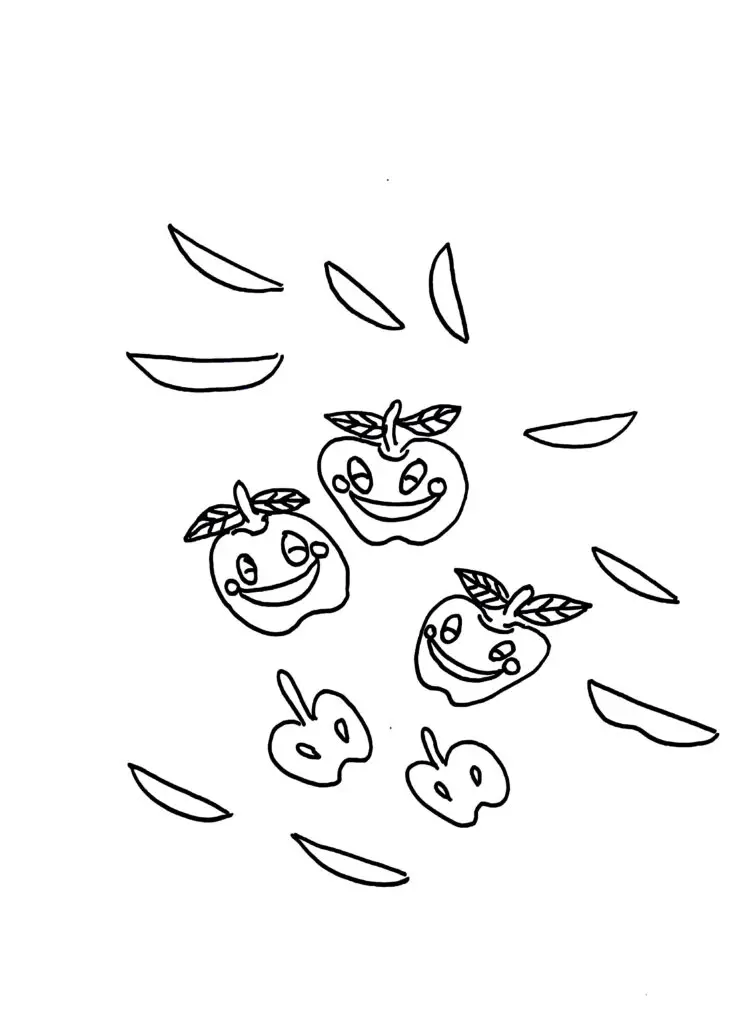
Facts about an apple
1. What family does the apple fruit belong to?
The apple fruit belongs to the Rosaceae family: Malus domestica is the scientific name for the apple.
2. Where did the cultivated apple originate?
It was the Tien Shan mountains of Central Asia where the cultivated apple originated. It was obtained from a wild apple species called Malus sieversii. The cultivated apple originated about 4000–10000 years ago.
3. What are the key chemical ingredients of an apple?
An apple is a fruit rich in natural sugars like fructose, glucose, and sucrose, along with a plentiful amount of fiber (pectin). Apples also have vitamins such as vitamin C and vitamin B and minerals like potassium and copper, along with flavonoids and polyphenols.
4. Do you know the only variety of apple native to North America?
The crab apple is the only variety of apple that is native to North America.
5. What are the health benefits of apples?
There are various health benefits of chemical ingredients that are present in the apple. Among these, “polyphenols and a soluble fiber, called pectin,” are beneficial for heart health. “Pectin reduces fat absorption and decreases unhealthy cholesterol called LDL cholesterol,” “leading to a reduction in the risk of heart disease.” “Pectin lowers blood sugar level, so the risk of type 2 diabetes mellitus is decreased.” As a prebiotic, soluble fiber (pectin) promotes the growth of healthy bacteria, which keeps the digestive system healthy. Apples have a plentiful amount of antioxidants, which neutralize free radicals that are harmful to the human body, leading to reduced cellular damage. “They prevent memory loss and so improve brain functioning.”
References
https://www.britannica.com/plant/apple-fruit-and-tree
https://www.medicalnewstoday.com/articles/267290
https://www.britannica.com/science/vitamin-C
https://www.healthline.com/nutrition/polyphenols#benefits
To download PDF click here – Facts about an apple
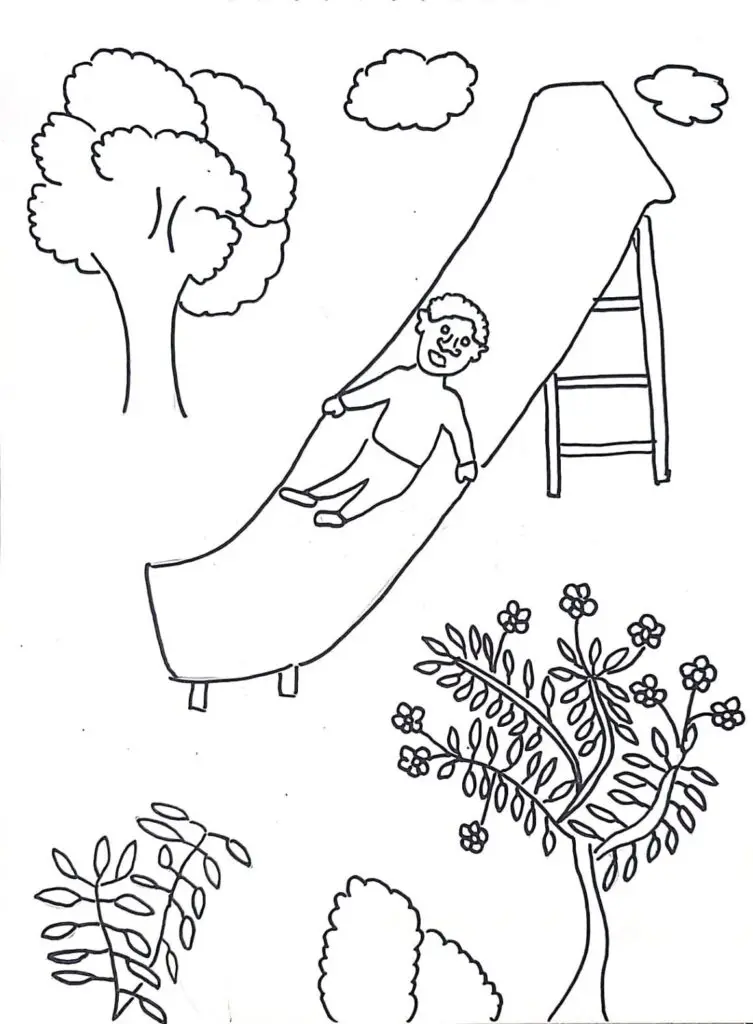
Playground Slide
1. What are the benefits of playing on a slide?
Playing on slides is beneficial for the development of kids. When any child plays on a slide, it results in physical and social skills’ development in it. It is useful to develop a child’s muscles. It also teaches us to keep patience. It improves balancing and co-ordination skills in children. Sliding can lead to an improvement of confidence level in a child.
2. Did you know that a playground slide is known by different names in different countries?
It is called a “slippery slide” or “slippery dip” in Australia and New Zealand, a “sliding board” in Philadelphia, a “sliding pond” in the New York City area, a “Rutsche” in Germany, and a “scivolo” in Italy.
3. What types of slides are there?
Here are some common types of playground slides.
a) Straight slides: A straight slide has a consistent, downside slant without twists. Fabricated from materials such as fibre-reinforced plastic or iron, these are ideal for schools, playgrounds, parks, and residential areas, and are designed for children aged 3 to 12.
b) Tube or enclosed slides: They look like a completely encased tunnel and can be either straight, curved, or bumpy.
c) Drop slides: These slides have a sharp vertical slope, providing a thrilling experience for users.
d) Wave slides: These slides have small swells that create wavy motion for a more exciting ride.
e) Spiral slides: These are twisted slides much like a helter-skelter ride.
f) Interactive slides: These slides have extra features beyond just sliding. They help to develop children’s imagination, social skills, and motor skills by including features like a built-in play kitchen, a multi-level platform, swings and gliders, a combination of slides and sandboxes, interactive doors and walls, educational and sensory play panels.
g) Multi-station slides: They are often seen in playgrounds and are large, multi-line slides that have multiple parallel slides side by side.
4. What material is used for the construction of playhouse slides?
Plastic, metal and wood are generally used for the fabrication of playground slides.
5. When was the first playground slide invented?
The origin of the first playground slide is debated, but the first known examples were developed in the early 1900s. For example, a 45-foot slide was installed at Smith Memorial Playground in Philadelphia, in 1904, and a rooftop slide was created in New York around 1900. In 1910, a nursery slide was developed at Tsarkoye, Russia. In 1922, Chales Wicksteed installed a wooden slide in England.
References
https://en.wikipedia.org/wiki/Playground_slide
To download PDF click here – playground slide
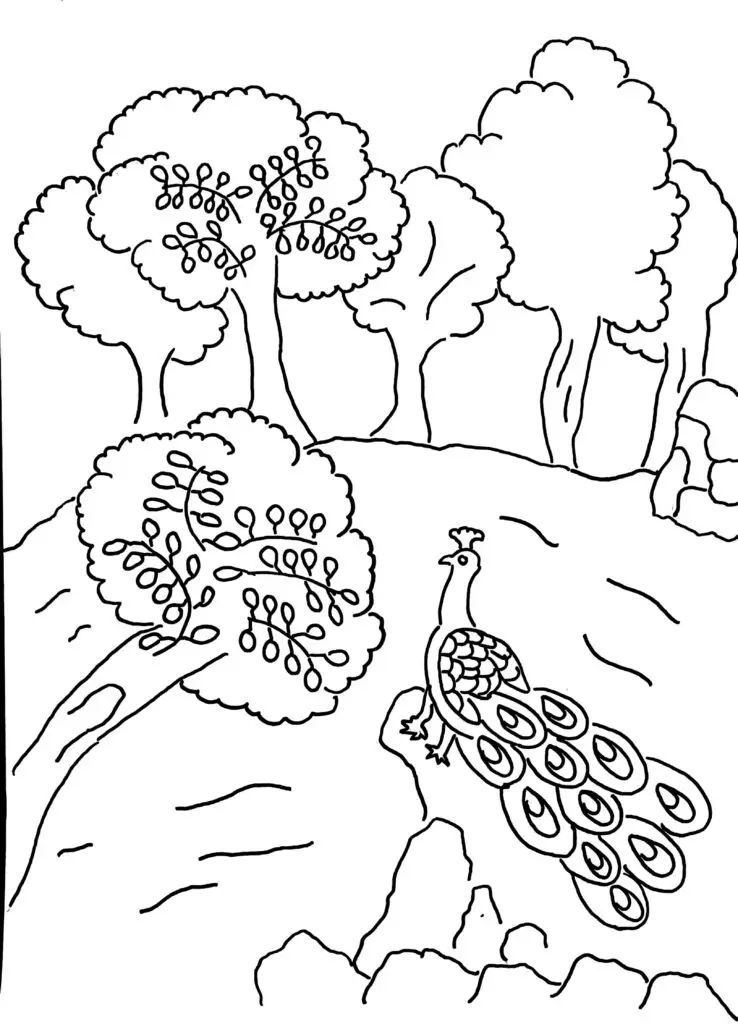
Green peafowl
1. Where is the green peafowl found?
The green peafowl are found in different habitats, such as tropical and subtropical forests, savannas, primary forests, secondary forests, deciduous forests, evergreen forests, grasslands and shrublands.
2. Can green peafowl eat snakes?
Yes, green peafowl are among the few animals that eat venomous snakes.
3. According to their eating habits, into which group are peafowl classified?
Peafowl belong to the class of omnivorous animals, as they eat foods such as flower petals, seeds, grasses, insects, reptiles and small-sized amphibians.
4. What is the difference between the sound of green peafowl and blue peafowl?
In green peafowl, males produce an ear-piercing, ki-wao or a-wow sound, while females produce an ear-piercing aow-aa sound. In blue peafowl, males produce an ear-piercing may-yow sound, while females produce a range of less loud sounds.
References
https://en.wikipedia.org/wiki/Green_peafowl
https://animalia.bio/green-peafowl?letter=g
To download PDF click here – Green peafowl
Looking for flying birds to color? Take flight into our creative nest with our top collection of free printable bird coloring pages featuring eagles, parrots, cute garden birds, and more!
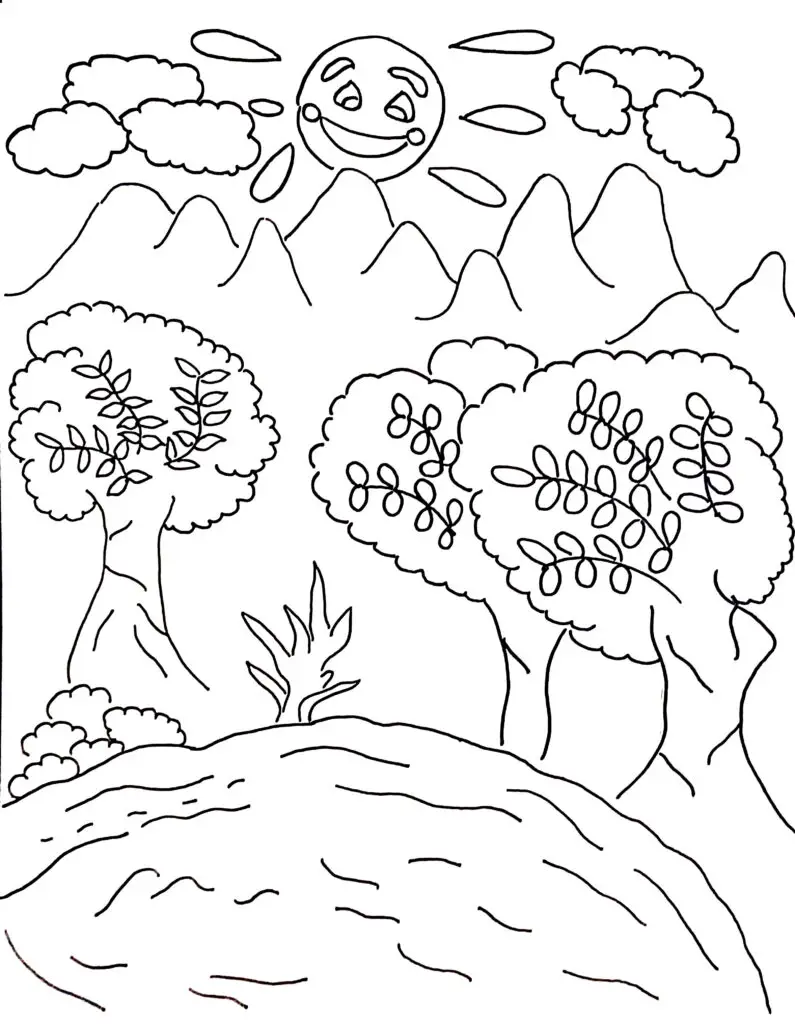
Types of mountains
1. How can one define a mountain?
Mountains are vertical, huge, and prominent landforms that are slanted in shape abruptly and have a peak at the top. They are about 1000 or more feet above sea level.
2. Do all mountains have the same or different weather patterns?
Each mountain shows different weather patterns. Their weather may be cold, hot, wet, or dry and depends on altitude, topography, latitude, and wind patterns.
3. How many types of mountains are there?
There are four types of mountains: fold mountains, block mountains, volcanic mountains, and residual mountains.
a) Fold mountains are created by the collision of tectonic plates, which leads to bending of the Earth’s surface. This process is not sudden; It requires millions of years to form a folded mountain. The process leads to the formation of long, narrow, and high-range mountains that have anticline and syncline folds. They are composed of sedimentary and metamorphic rock, granite intrusion, and fossils. The Alps, the Aravalli, and the Appalachians are some examples of folding mountains.
b) Block mountains are created when large blocks of the Earth’s surface are uplifted along a fault line. Tectonic forces are the primary cause of the formation of block mountains. They have a steep front and a relatively level top. The Harz Mountains of Germany, the Vosges Mountains of France, and the Sierra Nevada Mountains of California are some examples of block mountains.
c) Volcanic mountains form during volcanic eruptions when materials like molten rock, magma, gas, and ash come out through a small, narrow opening. All of these materials are then deposited over time, leading to the formation of volcanic mountains. They are often cone-shaped. Volcanic mountains are classified into Shield volcanoes, Composite volcanoes, and Cinder cones. Mount Fuji in Japan, Mount Kilimanjaro in Tanzania, and Mauna Loa in Hawaii are some examples of volcanic mountains.
d) Residual mountains: when there is erosion of land for many years, soft parts of mountains are removed and only hard rock remains, which leads to the formation of residual mountains. The Aravalli Range, Nilgiri Hills, Parasnath Hills, and Rajmahal Hills of Jharkhand are some examples of the residual mountains.
References
https://en.wikipedia.org/wiki/Mountain
https://en.wikipedia.org/wiki/Fold_mountains
https://en.wikipedia.org/wiki/Plate_tectonics
https://en.wikipedia.org/wiki/Fault_block
https://www.britannica.com/science/volcano
https://en.wikipedia.org/wiki/Volcano
To download pdf click here -Types of mountains
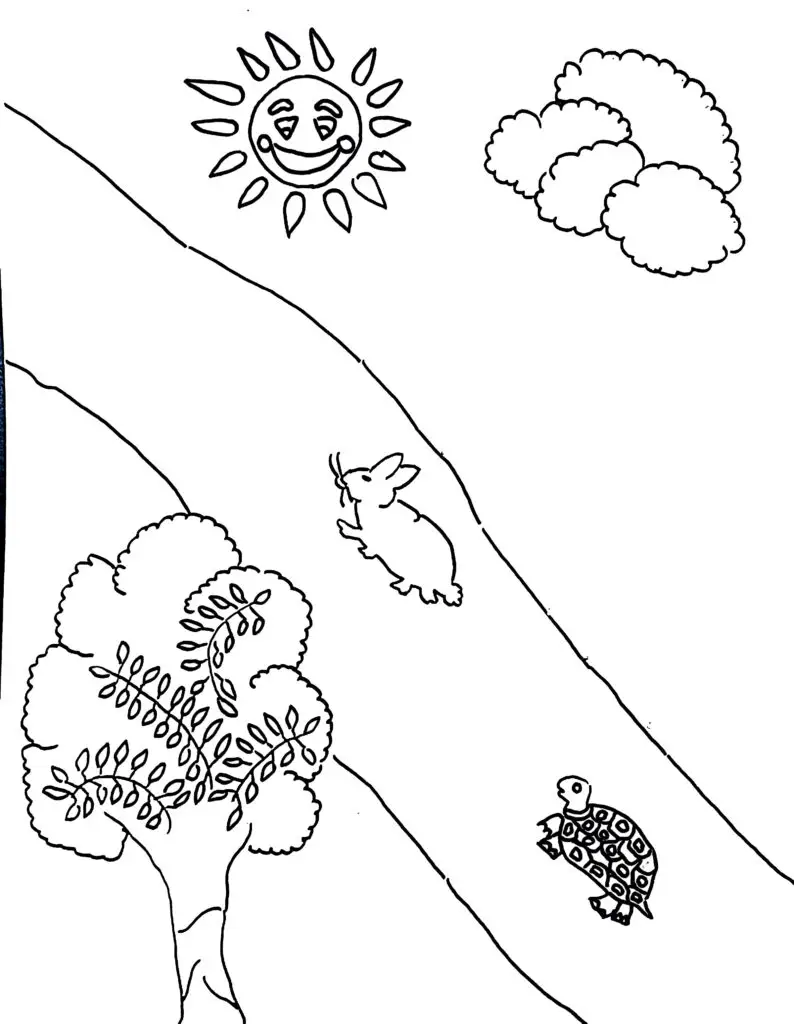
The tortoise and the hare fable
1.Have you heard about the wordless picture book ‘The Tortoise and the Hare’?
Yes, there is a wordless picture book of ‘The Tortoise and the Hare’ story. Jerry Pinkney’s books became popular because of their beautiful illustrations. The book was published in 2013.
2. Did you know that “The Tortoise and the Hare” story appeared on a stamp?
Yes, the story of The Tortoise and the Hare appeared on stamps of countries that include Cyprus, Dahomey, Dominica, France, Greece, Hungary, the Maldives, and Monaco.
3. Have you heard about Disney’s version of ‘The Tortoise and the Hare story?
The Disney version of the fable appeared in the 1935 short titled The Silly Symphonies. The short film was directed by Wilfred Jackson and featured cartoon characters Max Hare and Toby Tortoise. It was released on January 5, 1935, and won the Academy Award for Best Cartoon Film.
4. What is a notable musical version of The Tortoise and the Hare story?
The American fusion band named Yellowjackets created a musical version of the story for their album Politics. It was one of the notable musical versions of the famous fable.
References
https://en.wikipedia.org/wiki/The_Tortoise_and_the_Hare
https://en.wikipedia.org/wiki/The_Tortoise_%26_the_Hare_(book)
https://d23.com/a-to-z/silly-symphony/
To download PDF click here – The tortoise and the hare fable
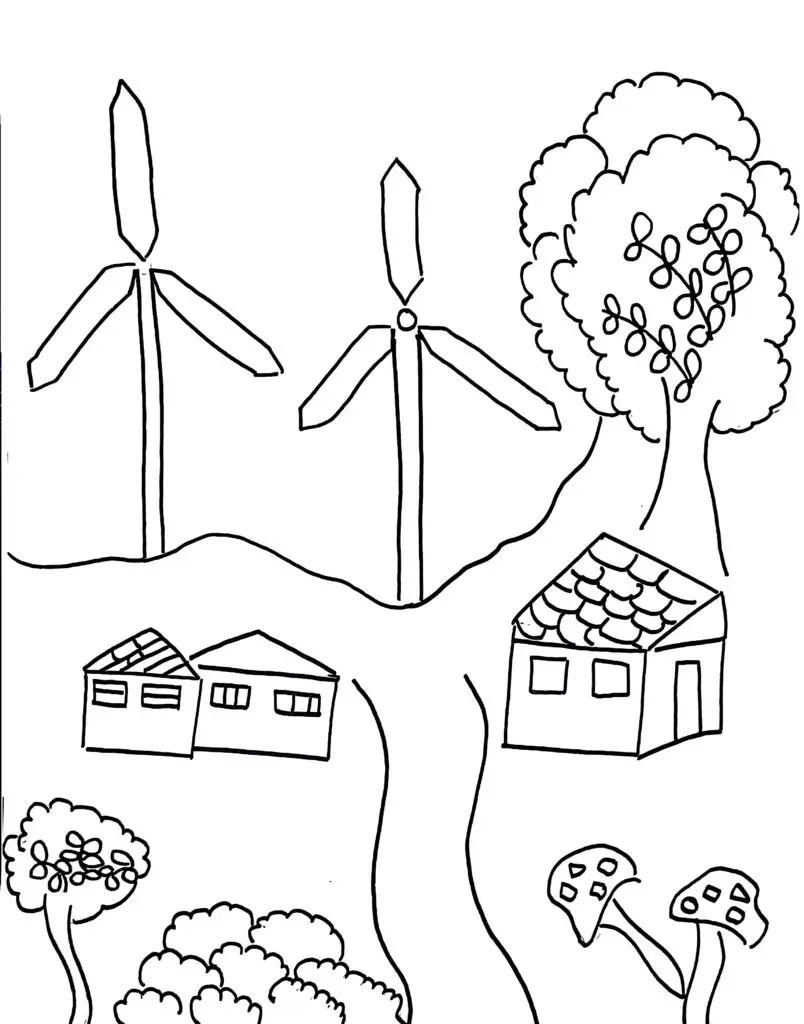
Types of wind energy
1. What are the types of wind energy?
Wind energy systems are divided into different types based on the location of the turbine, axis of rotation, and production scale.
Depending on the location, wind energy systems are classified as onshore wind energy systems, offshore wind energy systems, and hybrid wind energy systems.
a) Onshore wind energy
Onshore wind energy involves wind turbines located on land, where kinetic energy is transformed into electric energy. These systems are commonly situated in open areas with sufficient wind speed to rotate turbines. A key advantage is that they need low costs for installation and maintenance, and provide clean energy that does not emit greenhouse gases. Several considerations are needed for installing an onshore wind energy system. There must be sufficient and continuous wind speed for the operation of turbines. The turbines should be situated in areas with minimal disruption. Some examples of onshore wind energy systems include the Muppandal wind farm, which is located in Tamil Nadu, India, and has a production capacity of 1500 MW, the Gansu wind farm in China, and the Mojave wind farm in California, United States.
b) Offshore wind energy
The offshore wind energy system is located at sea with turbine blades above water and their gearboxes at the top of the tower. These systems use large turbine blades, benefiting from greater, more consistent wind speeds at sea compared to onshore systems. Just like onshore wind energy systems, kinetic energy is transformed into electric energy. The more consistent wind flows over the open ocean. These can be installed in large areas of the sea. They can mitigate concerns related to noise and visual impact. Their installation and maintenance are costly. Marine environments can be affected and disrupted by the installation of these systems. Some examples of offshore wind energy systems include Hornsea 2, in the North Sea, with a production capacity of 1,386 MW, which provides power to about 1.4 million houses in the United Kingdom, and Vineyard Wind 1, which has a production capacity of 806 MW, off the coast of Massachusetts, United States.
c) Hybrid wind energy
A hybrid wind energy system is a combination of two different power sources. Among the two, one is wind, and the other is either solar, hydropower, or a diesel generator. In a wind-solar combination, wind turbines are connected with solar PV panels, where solar provides electricity during the day, while wind turbines generate electricity at night. In a wind and hydro combination, wind turbines are connected with pumped hydro storage systems. In diesel generator and wind turbine combination systems, there are generators that provide electricity during power failure or when wind turbines are not generating electricity. The diesel generator acts as a backup. The main advantage of hybrid systems is that they provide a continuous supply of electricity without any interruption. These are some of the cost-effective systems that reduce greenhouse gas emissions. They can be applied for small-, medium-, and large-scale electricity production.
References
https://en.wikipedia.org/wiki/Wind_power
https://www.britannica.com/science/wind-power
To download PDF click here – Types of wind energy