



Colouring pages for adults offer a relaxing and creative escape from daily stress. Unlike simple children’s designs, these pages feature intricate patterns, mandalas, and detailed scenes that challenge and engage the mind. Studies show that colouring can reduce anxiety, improve focus, and even boost fine motor skills. When adults use colouring pages for adults, they often enter a meditative state similar to mindfulness. Many people now include colouring in their daily self-care routines. Interestingly, Carl Jung used colouring as a therapeutic technique over a century ago. Today, therapists still recommend it to help manage stress and promote mental wellness. With so many themes available—from nature to abstract art—colouring pages for adults make it easy to find something that sparks your interest and creativity. Here we also mention the interesting facts about object or person in that particular colouring page.

Colouring pages for adults -Shri Krishna is playing flute
Facts about the Flute
1. Do you know which material is used in flute crafting?
From ancient times, materials like wood, bones, glass, plastic, and bamboo have been used in crafting flutes. Nowadays, flutes are constructed of silver and nickel. Silver is used for crafting professional-grade flutes.
2. Who developed the modern concert flute?
The modern flute and its key sytem were developed in by a German man, Theobald Boehm, in 1847. The design made by him led to an improvement in the tone and workability of the flute. Modern day flute designs are based on a design made by Theobald Boehm.
3. Which types of flute?
Flutes are of two main types – side-blown flutes and end-blown flutes. Side-blown flutes have to hold horizontally while end-blown flutes have to hold vertically. Concert Flute, Piccolo, Alto Flute, bass flute, Contra alto flute, Contra bass flute, Subcontra bass flute, Treble flute, Dizi, bansuri, and Baroque flutes come as sideblown flutes, also called transverse flutes. Danso, kaval, Pan Flute, Shakuhachi, Ney, Xiao, Native American Flute, and Recorder come under end-blown flutes, also called fipple flutes.
4. When did the use of the flute start?
The flutes were in use from the paleolithic period. Flutes were crafted from bones, mainly bird bones and the femurs of big animals like cave bears. The documented evidence reveals that about 9000 years ago, flutes were used in China. In India, the flute has been utilized since Vedic times, around 1500 BCE. Bamboo flutes were utilized in ceremonies.
References
https://en.wikipedia.org/wiki/Flute
https://study.com/academy/lesson/flute-history-facts-quiz.html
https://philharmonia.co.uk/resources/instruments/flute/
https://www.britannica.com/art/flute-musical-instrument
To download PDF click here – Facts about the flutes
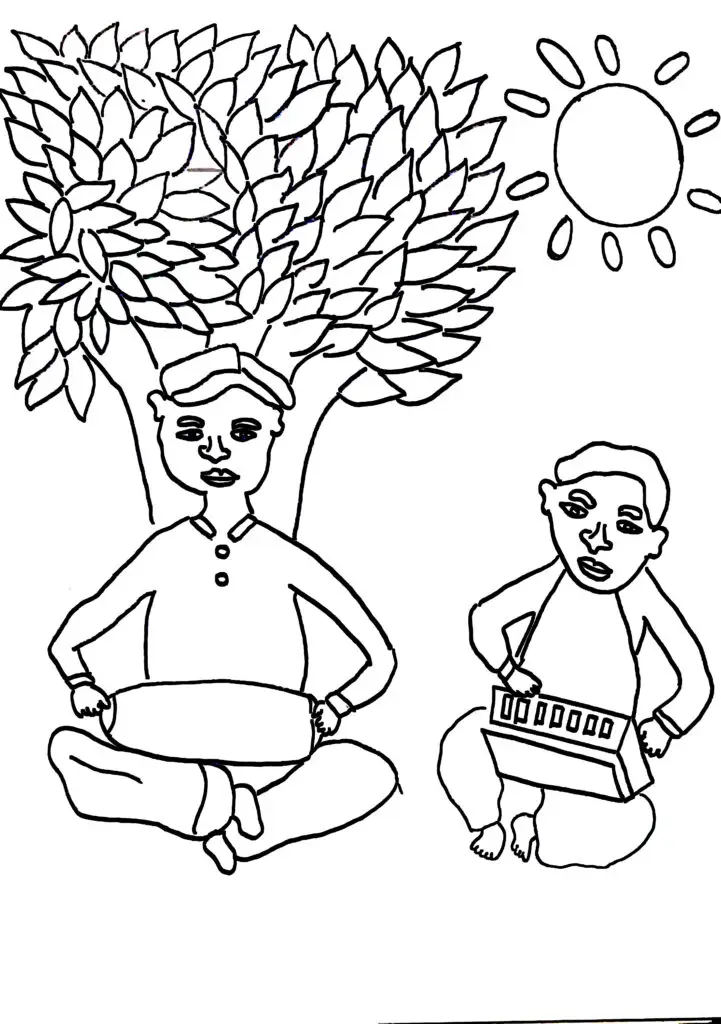
Colouring pages for adults - dholki and Indian harmonium
Interesting facts (Dholki)
1. Did you know about Dholki?
The Dholki is also known by the name Naal. As compared to the dholak, the dholki has longer and slimmer bodies. The dholki is used in qawwali, bhajan, lavani, kirtan bhangra, chutney, baithak gana, tamasha, street performance, and various classical styles. As compared to other similar instruments like the tabla and dholak, the dholki produces a loud sound.
2. In which region is dholki popular?
In South Asia, the dholki is a very popular musical instrument. Among South Asian countries, it is used in India, Bangladesh, and Pakistan.
3. What is dholki’s material of construction?
A dholki is a barrel shaped instrument that has two different-sized heads. A small head is used to produce a high-pitched sound, while a large head is used to create a low-pitched sound. A small head is covered with goatskin. A large head is generally covered with buffalo skin. The body of the dholki is made of wood. Sheeshaame and mango wood utilized for dholki.
4. Do you know about the size of a dholki?
The dholki looks like a barrel or cylinder shape. The length of a dholki is about 16–24 inches. Two drumheads show different sizes. The small head of the dholki is about 5.5-8 inches in diameter. The large head of the dholki is about 7.5 to 10 inches in diameter. Goat skin is used to produce a higher-pitched sound, while buffalo skin is used to produce a lower-pitched sound.
References
https://en.wikipedia.org/wiki/Dholak
https://artsandculture.google.com/asset/dholki/-gFJuKT1lAfb_A?hl=en
To download PDF click here- Interesting facts (Dholki)
Colouring pages for adults- Rangoli design
Interesting facts (Rangoli art)
1. Do you know the kind of material that is used to create rangoli?
Various kinds of material are applied to the creation of rangoli art. Powdered limestone, red ochre, colored sand, rice flour, turmeric, flower petals, leaves, quartz powder, and colored rock can be utilized for rangoli art.
2. Do you know what is indicated by rangoli?
Rangoli art is created at various ceremonies and festivals. It is created outside the entrance door of the houses. Rangoli indicates joy, peace, and welcome. Rangoli also removes negative energies and brings good luck.
3. Rangoli art originated in which country?
As per documented evidence, rangoli art originated in India. It is obtained from the Sanskrit word rangavali. In English, “Ranga” means color, while “avali” means line or row. “Rangavali” is a line of color.
4. Do you know what rangoli is called in different regions of India?
In Maharashtra and Karnataka, rangoli art is called rangoli. In Tamil Nadu, it is known as kolam. In Andhra Pradesh, it is known by the name muggu. In West Bengal, it is known as alpana or alpona. In Rajasthan, it is called mandana. In Bihar, it is called “aripana.” In Panjab, Haryana, Madhya Pradesh, and Uttar Pradesh, it is called chowkpurana. In Gujarat, it is called sathaya or sathiya.
5. Do you know the health benefits of rangoli art creation?
At the time of creating the rangoli, there is bending and stretching of the body. Both bending and stretching come as a form of exercise. So when we bend and stretch during the creation of rangoli, it leads to increased fitness.
References
https://en.wikipedia.org/wiki/Rangoli
https://www.richlandlibrary.com/blog/2020-07-15/rangoli-creative-expression-indian-folk-art-through-use-colors
https://www.britannica.com/art/rangoli
.
To download click here –Interesting facts (Rangoli)
adults coloring pages- Rangoli design
Interesting facts ( Kolam -rangoli art in Tamil Nadu)
1. Did you know Kolam (Rangoli) is traditionally made from which material?
In Tamil Nadu, kolam is the name for rangoli art. In Tamil Nadu, there is a tradition of creating kolam outside of houses and establishments. Kolam is traditionally created from rice flour. Rice flour, or colored rice flour, is utilized to create a geomeric pattern. Kolam art originated long back around 2500 BC, during the Indus Valley Civilization.
2. Do you know about the types of kolam art?
There are three kinds of kolam. These include Pulli kolam, which is dot kolam; Sikku kolam, which is twisted loop kolam; Kambi kolam, which is line pattern kolam.
3. Do you know the festival at which kolam is created?
In Tamil Nadu, at festivals like Pongal and Karthika Deepam, kolams are made in large sizes and of specific patterns. This pattern is like sugarcane, vegetable fruits, lamps, and firecrackers. Pongal is also called the harvest festival. Pongal is a fest to thank God, nature, and animals. Pongal is celebrated for four days, which are Bhogi Pongal, Thai Pongal, Mattu Pongal, and Kaanum Pongal. The festival, which is celbrated on the full moon day of the Kartik month, is known as Karthighai Deepam.
4. Do you know the scientific reason behind kolam?
Its main motive is to exercise the mind as well as the body. Kolam makes the mind calm, increases focus, and increases cognitive skills.
References
https://en.wikipedia.org/wiki/Kolam
https://www.indianheritage.gov.sg/pongalo-pongal/what-is-pongal.html
https://en.wikipedia.org/wiki/Pongal_(festival)
To download PDF click here – Interesting facts (About Kolam – rengoli art in TamilNadu)
adults coloring pages-Rangoli design 3
Interesting facts (Rangoli – In Maharashtra)
1. According to Hindu mythology, who was responsible for the origin of rangoli art?
According to a Hindu mythological story, Lopamudra, wife of sage Agasta, was behind the origin of rangoli art. Lopamudra had done this to help Sage Agasta and to decorate Yajna Kunda.
2. Did you know why Lopamudra used five colors for rangoli creation?
Lopamudra had selected only five colors. These five colors represent the Panch Tatvas. Sky, wind, fire, water, and earth are the Panch Tatvas. The blue color represents the sky. The green color represents nature or water. The white color represents wind. The black color represents soil, and the red color represents fire.
3. Do you know the names of the festivals in Maharashtra, where rangoli are drawn traditionally?
There are various festivals in Maharashtra, like Gudi Padwa, Janmashtami, Diwali, Dasera, Ganesh Chaturthi, and Navratri, in which rangoli is drawn in front of homes and establishments. Rangoli is drawn for positive energy, to worship Lord Lakshmi, and to welcome guests.
4. How many types of rangoli are there in Maharashtra?
There are different styles or types of rangoli in Maharashtra. These are freehand rangoli, traditional rangoli, floral rangoli, ornamental rangoli, geometric rangoli, Tipkyanchi rangoli, and Sanskar Bharti rangoli.
In freehand rangoli, an individual can draw a rangoli design without the need for stencils and pre-drawn outlines. In traditional rangoli design, designs that are drawn represent ancient patterns such as floral motifs and auspicious symbols. Floral rangoli: In this, an individual uses floral petals and natural materials to create rangoli.
In ornamental rangoli, rangoli design includes images of birds, animals, trees, and God. Geometric rangoli: In this type of rangoli, there are lines, dots, and geometric shapes drawn to make rangoli. Thipkyanchi rangoli: In this type, rangoli is drawn by using dots. Initially, only dots are created, and after that dots are joined with each other to create a rangoli pattern or design. Sanskar bharti rangoli: In this type of rangoli, an individual draws a symmetrical pattern by utilizing geometric shapes, and in this type of design, generally religious symbols are incorporated.
To download PDF click here – Interesting facts (About Rangoli)
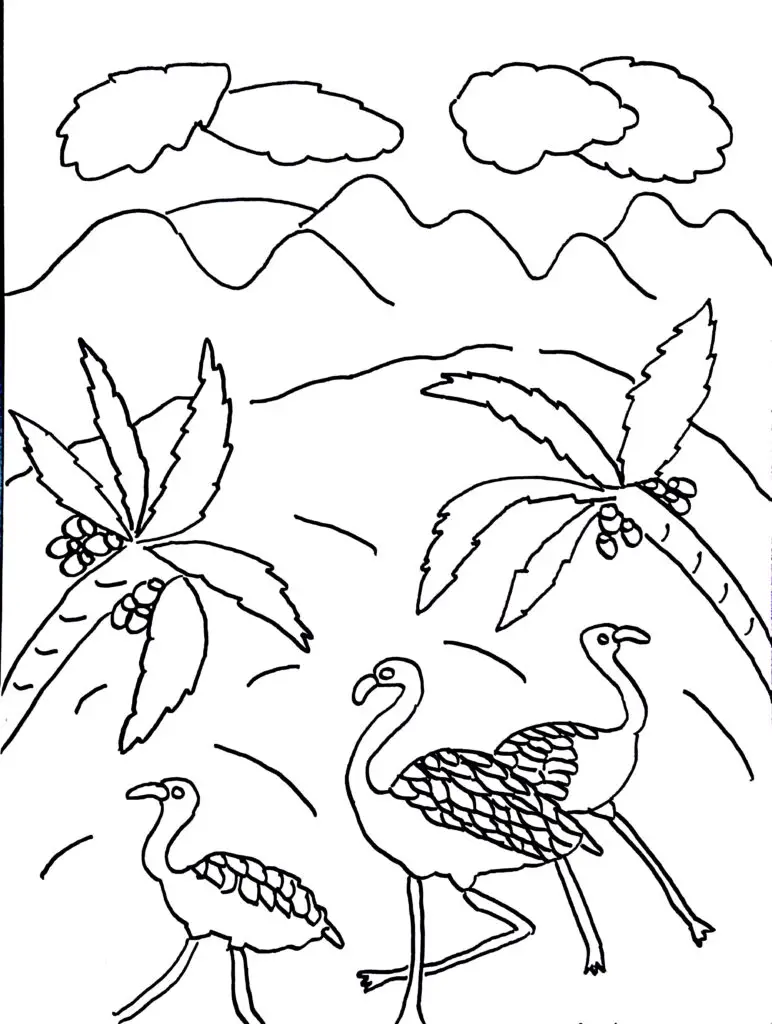
colouring pages for adults- flamingo birds
Interesting facts about flamingos
1. What is flamingo crop milk?
Crop milk is a nutrient-enriched secretion produced by flamingos, which is full of nutrients like fats and protein. It is produced in the crop, a muscular sac in the upper digestive tracts of both male and female flamingos. It has a bright red color due to a carotenoid. Flamingos can produce crop milk for up to six months, but the color becomes faint after some time.
2. How can flamingos sleep in a standing position?
A flamingo’s leg joint has a gravity-driven stay apparatus. This locks the flamingo’s legs without any effort. This characteristic of flamingos helps them to save their energy and control their body temperature by avoiding heat loss.
3. Flamingo term originates from which language?
The term flamingo is derived from the Spanish or Portuguese word flamengo, which means flame-colored.
4. Flamingo is the national bird of which country?
The American flamingo is the official national bird of the Bahamas. They are found in large numbers in the Bahamas. The Carribean flamingos are found in large numbers in Great Inagua. They are known for their beautiful pink color, long legs and appearance, which symbolizes the beauty and grace of the nation. They are also part of the Bahamian heritage as they are featured on the Bahamian Coat of Arms.
5. What are the unique characteristics of flamingos?
Flamingos are filter feeders with unique features that allow them to filter food from water using comb-like plates called lamellae in their mouth. The unique feature helps them to pump water in and out and sift out their food, and they keep their head upside down in water. Another distinct feature is that flamingos have long legs and necks. Their long legs help them to stand in the water. They have 19 cervical vertebrae, which make their necks elastic for movement, such as reaching down to feed.
References
https://en.wikipedia.org/wiki/Flamingo
https://en.wikipedia.org/wiki/Crop_milk
https://en.wikipedia.org/wiki/Crop_(anatomy)
https://www.britannica.com/animal/flamingo-bird
https://en.wikipedia.org/wiki/Flamingo
https://bahamasinformationguide.com/national-symbols/the-west-indian-flamingo/
https://en.wikipedia.org/wiki/Lamella_(surface_anatomy)
To download PDF click here – Interesting facts about flamingos
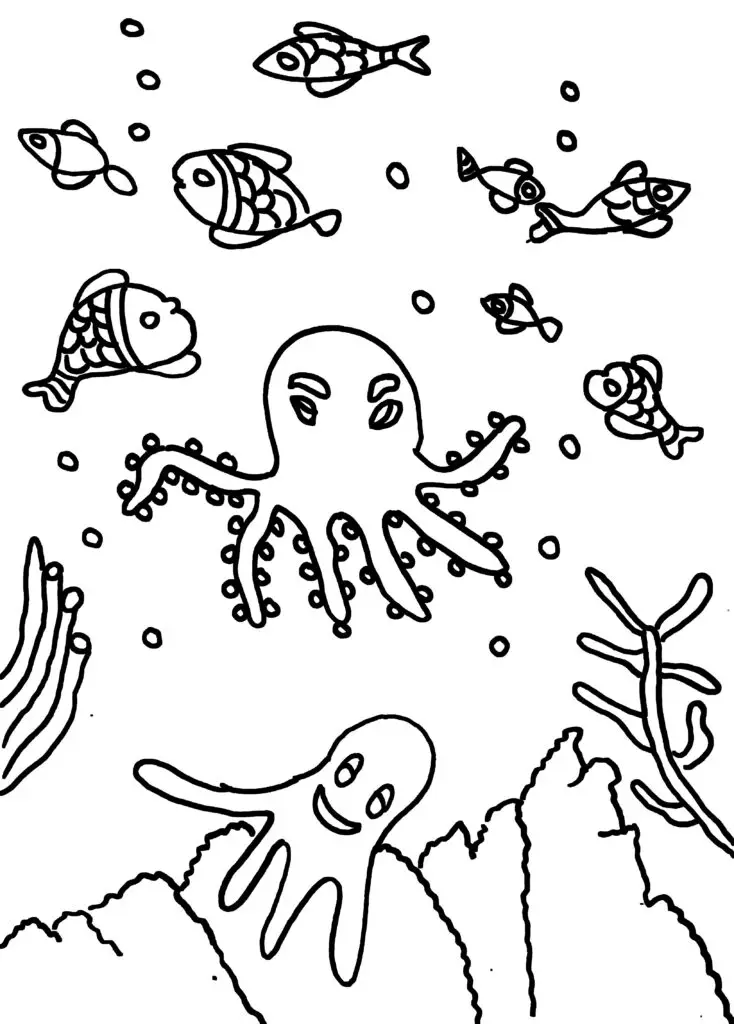
coloring pages for adults- Octopus in deep sea water
Facts about octopus
1.Do Octopuses have the ability to change their color?
Octopuses can change their color for camouflage, communication and mood expression. They can do this because of thousands of specialized cells called chromatophores present in their body. Chromatophore cells have sacs of colored pigments like yellow, black, and red. These cells open after the contraction of muscles present surrounding them and the muscle contraction is under the control of the nervous system. Because of these pigment-containing cells, they are able to change their color, shape, and texture and blend with their surroundings.
2. Is the statement “octopuses are Intelligent” correct?
Compared to other invertebrates, octopuses have a greater number of neurons, and their nervous system is also different, which allows for both central and local control of their activity. Octopuses are able to solve mazes and they have short-term and long-term memory. They can differentiate between different shapes and patterns. They are also able to use tools, like stones and coconut shells, for building shelters. They are quick learners and use their intelligence to solve their problems.
3. Which is the largest known species of octopus?
The Giant Pacific octopus is the largest among all the species of octopus. Their average weight is about 50 -110 lb, and they have an arm span of about 14–16 feet. Their whole body is boneless except for its beak, which is like a parrot’s beak and hard. Their average life span is about 3–5 years. They live in the Northern Pacific Ocean from California to Japan. They always make their shelter in caves and crevices. They are nocturnal hunters and paralyze their prey by using venom.
4. Which is the smallest species of octopus?
The Star-sucker pygmy octopus is the smallest among all the species of octopus. Their average length is about 1.5–2.5 cm, and they weigh about 1 g. They are mainly found in shallow and coastal waters of the Western Pacific Ocean.
References
https://en.wikipedia.org/wiki/Chromatophore
https://en.wikipedia.org/wiki/Giant_Pacific_octopus
https://en.wikipedia.org/wiki/Octopus_wolfi
To download PDF click here –Facts about octopus
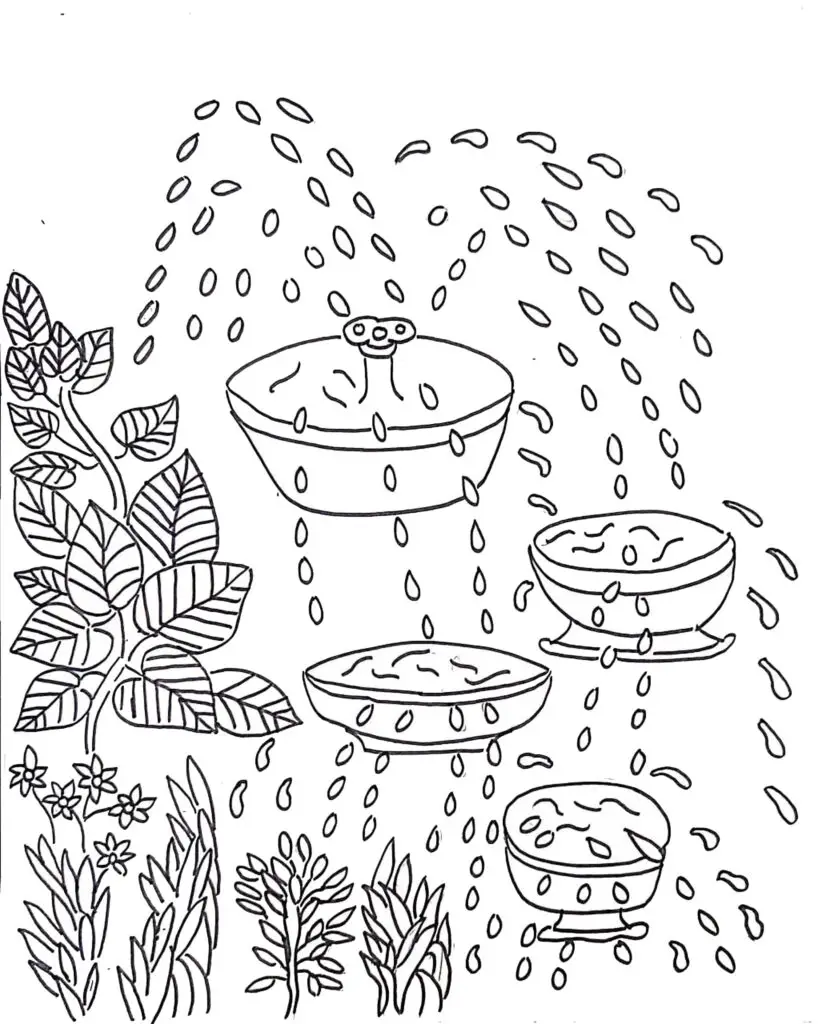
Colouring pages for adults - Water fountain
Interesting facts (About the water fountains)
1. When was the first water fountain used?
The first water fountain appeared around 3000 BCE in Mesopotamia. It consisted of a simple basin in a garden and was based on gravitational force.
2. Who designed the pressurized system for the water fountain system first?
The first pressurized water fountain system was designed by Heron of Alexandria, who resided in Roman Egypt and utilized the concept of hydrostatic and pneumatic pressure for the fountain system known as Heron’s Fountain. The modern-day public drinking water fountain system was later developed by two Americans, Luther H. Haws and Hasley Willard Taylor.
3. For what purpose did ancient peoples use water fountains?
Ancient people utilized water fountains for several purposes, primarily the fulfillment of day-to-day needs such as drinking, bathing, washing, livestock watering, water management and irrigation. In ancient times, indoor plumbing systems were not present, so fountain water was theonly source of potable water for people residing in towns, cities, and villages. Water fountains were also utilized for washing clothes and other utensils, and provided water for public gardens.
4. What are the benefits of a water fountain?
Water fountains have various benefits, such as stress relief, improvement in air quality, enhanced humidity, and space beautification. The gentle and soft sound of falling water reduces stress hormones and ultimately reduces stress and anxiety, enhances mood, enhances positive energy, and improves sleep. Water fountains release negative ions into the atmosphere that combine with dust, allergens, and pollutants and clear the air. It moistens the dry air, which leads to an improvement in plant and human health. It improves the appearance of the surroundings.
5. Do you know the tallest water fountain in the world?
King Fahd’s fountain is the tallest of all water fountains in the world. It is located in Jeddah, Saudi Arabia, and was established in 1985. It uses three powerful turbines that jet seawater from the Red Sea up to a height of 1,024 feet.
References
https://en.wikipedia.org/wiki/King_Fahd%27s_Fountain
https://en.wikipedia.org/wiki/Hero_of_Alexandria
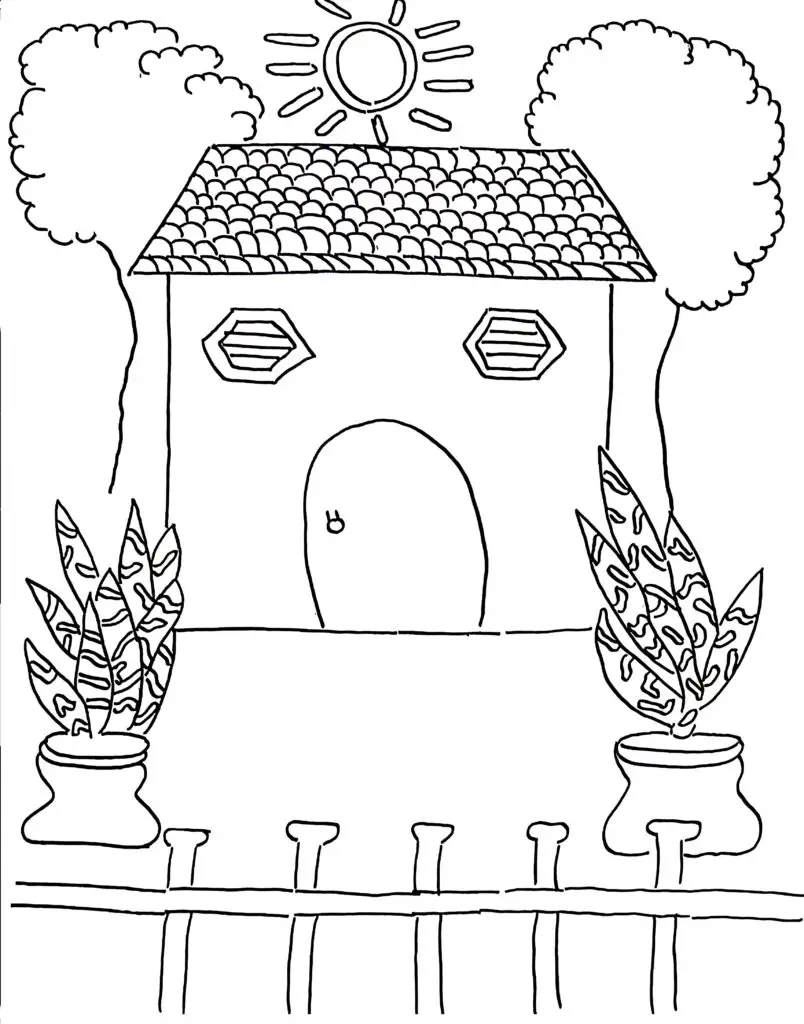
Colouring pages for adults- Snake plant
Facts about snake plants.
1. What are the benefits of snake plants?
The snake plant acts as an air purifier. They extract toxins like formaldehyde, benzene, and xylene. They exhale oxygen into the atmosphere in the day as well as at night and hence boost sleep quality. They work as natural humidifiers as they increase the moisture level in the surrounding areas, which helps to prevent respiratory problems and dry skin issues. They promote the health of a person by reducing stress and anxiety. They can survive in low sunlight conditions and also need very little water to grow. Research studies have shown that its extract has analgesic, antidiarrheal, antioxidant, and antidiabetic effects.
2. What is the lifespan of the snake plant?
There are different varieties of snake plant, which show variation in life span. Many species can live 5 to 10 years, while few species can live up to 50 years when kept in proper care. Excessive watering is harmful to snake plants.
3. What is the native place for snake plants?
They are native to West Africa and parts of Asia, where they are found in dry, rocky lands, grasslands, and woodlands.
4. Which are the medicinal-value chemicals that are present in snake plants?
They have saponins, flavonoids, alkaloids, and steroids. These chemical constituents are all therapeutically important. Saponins have antimicrobial and anti-inflammatory effects. Flavonoids present in its leaves also have antimicrobial and anti-inflammatory effects. Alkaloid has antimicrobial, anti-inflammatory, and analgesic effects. Steroids, phenolic acid, and triterpenoids have anti-inflammatory and anticancer effects. Because of all these substances, its extract is utilized in pharmaceutical preparations to treat acne and other fungal infections, as an antipyretic, as an analgesic, and in the treatment of respiratory diseases such as asthma and bronchitis
References
https://en.wikipedia.org/wiki/Dracaena_trifasciata
https://www.healthline.com/health/benefits-of-snake-plant
To download PDF click here – Facts about snake plants
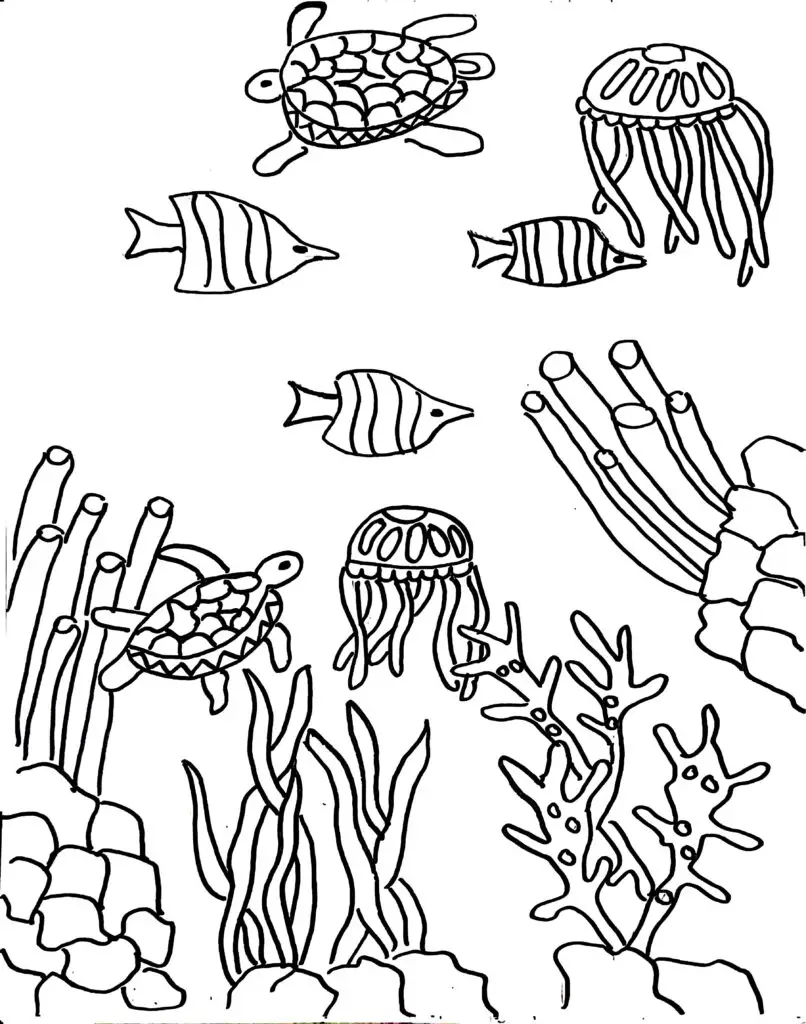
Colouring pages for adults seaweed
Facts about seaweed
1. How does seaweed benefit marine life?
Seaweed has various benefits for marine life. Seaweed acts as shelter for various marine animals such as fish, crustaceans, mollusks, and marine mammals. As a dense structure like a kelp forest, seaweed acts as a habitat for a number of marine animals. Fish species, like the juvenile and sargassum fish, and crustaceans, such as crabs, shrimp, lobsters, and amphipods, reside in seaweed that provides shelter and guards them from predators. Mollusks and invertebrates, such as abalone, marine snails, worms, and sea squirts, make their home in dense seaweed. Furthermore, sea mammals such as sea otters and sea lions routinely make their homes and also search for opportunities for hunting in kelp forests. They act as a food source for marine life. Birds like sea ducks find their food in kelp forests. During the process of photosynthesis, seaweed produces a large amount of oxygen, and this oxygen is utilized by marine animals. They maintain the marine ecosystem by absorbing excess amounts of nitrates and phosphorus from the water. They also absorb the excess amounts of carbon dioxide present in the marine environment. Seaweed on the seabed protects the coastline from erosion. Overall, seaweed is an important part of the marine ecosystem maintenance chain.
2. How is seaweed beneficial for humans?
Seaweed is enriched with vitamins, minerals, fiber, and potent antioxidants that are generally not present in land-based plants. The production of thyroid hormone requires iodine, and seaweed is enriched with it. Seaweed has abundant amounts of vitamins such as A, C, K, E, and B vitamins, and minerals such as calcium, zinc, magnesium, and iron. The polyphenols and carotenoids present in seaweed have an important role in guarding body cells from the damaging effect of free radicals, while fibers and polysaccharides, such as alginate, carrageenan, and fucoidan present in them, are beneficial for gut microbial flora. It enhances the healthy gut microbiome and ultimately improves gut digestion. Fucoxanthin plays a crucial role in the regulation of blood sugar levels.
3. What is the risk associated with seaweed to humans?
Some kinds of seaweed have a high amount of iodine that leads to thyroid dysfunction, so people with a thyroid condition should avoid it. There may be a possibility of the presence of toxic elements such as arsenic, cadmium, and lead in seaweed that are present in a contaminated marine environment. They also interfere with blood-thinning medication, as they are rich in vitamin K.
References
https://www.healthline.com/nutrition/benefits-of-seaweed#gut-health
https://www.medicalnewstoday.com/articles/323916#benefits
https://en.wikipedia.org/wiki/Seaweed
To download PDF click here – Facts about seaweed

Interesting facts about planes
1. What are the benefits of painting a plane in white?
There are several reasons why a plane is colored white. It helps to keep the plane cool. White is an excellent reflector of light, while other colors absorb it. Therefore, the plane remains cool during flight and when it lands on the ground. It saves energy and makes passengers comfortable. It is easier to observe any faults in the plane, such as cracks or oil leaks, because of the white color. Any fault is visible against the white-colored background.
2. Why do commercial flights fly at high altitudes?
Generally, passenger flights travel at altitudes of 30,000 to 40,000 feet. When a passenger flight travels at this high altitude, it leads to decreased air resistance, resulting in less fuel consumption and a smoother ride.
3. Why are oxygen masks essential during plane flights?
Planes are provided with oxygen masks. These oxygen masks are an essential component of a plane because every plane has to travel at high altitudes, and there is a risk of a sudden drop in cabin pressure. These oxygen masks provide oxygen for about 15 to 20 minutes by automatic activation after a pressure drop. Inside the mask, there is a chemical generator that produces oxygen gas.
4. What is the use of the black box on a plane?
It is a device or machine that keeps records regarding plane parameters, such as height, performance, control, and speed. Although named a black box, it is actually an orange or yellow-colored box. It is located at the rear of the aircraft. It also records sound in the cockpit section of the plane. The information obtained from the black box is crucial for finding the cause of an accident.
5. What is the average speed of a passenger plane?
A passenger plane has an average speed of 500 to 600 mph, and with this speed, a plane is able to pass over the entire Atlantic Ocean in approximately 7 hours.
References
https://www.indiatoday.in/science/story/planes-fly-high-cruising-altitude-fuel-efficiency-savings-drag-air-density-jet-physics-step-climb-boeing-indigo-airbus-know-why-2830597-2025-12-04
https://en.wikipedia.org/wiki/Oxygen_mask
https://science.howstuffworks.com/transport/flight/modern/black-box.htm
https://kids.britannica.com/scholars/article/flight-recorder/34576
https://en.wikipedia.org/wiki/Flight_recorder
https://www.britannica.com/science/How-Long-Does-It-Take-to-Fly-Around-the-World